5 XII 2025 - 14 XII 2025
UNIQUE, Warsaw, PL
-
![]()
How do we sleep at night is a dialogue between two artists: Heather Lynne Seavey Brumund (C.V.Brumund) and Sylwia Wirska, unfolding on interpersonal and intercontinental planes, extending beyond the linearity of time as it ventures into the terrain of the dream state.
-
![]()
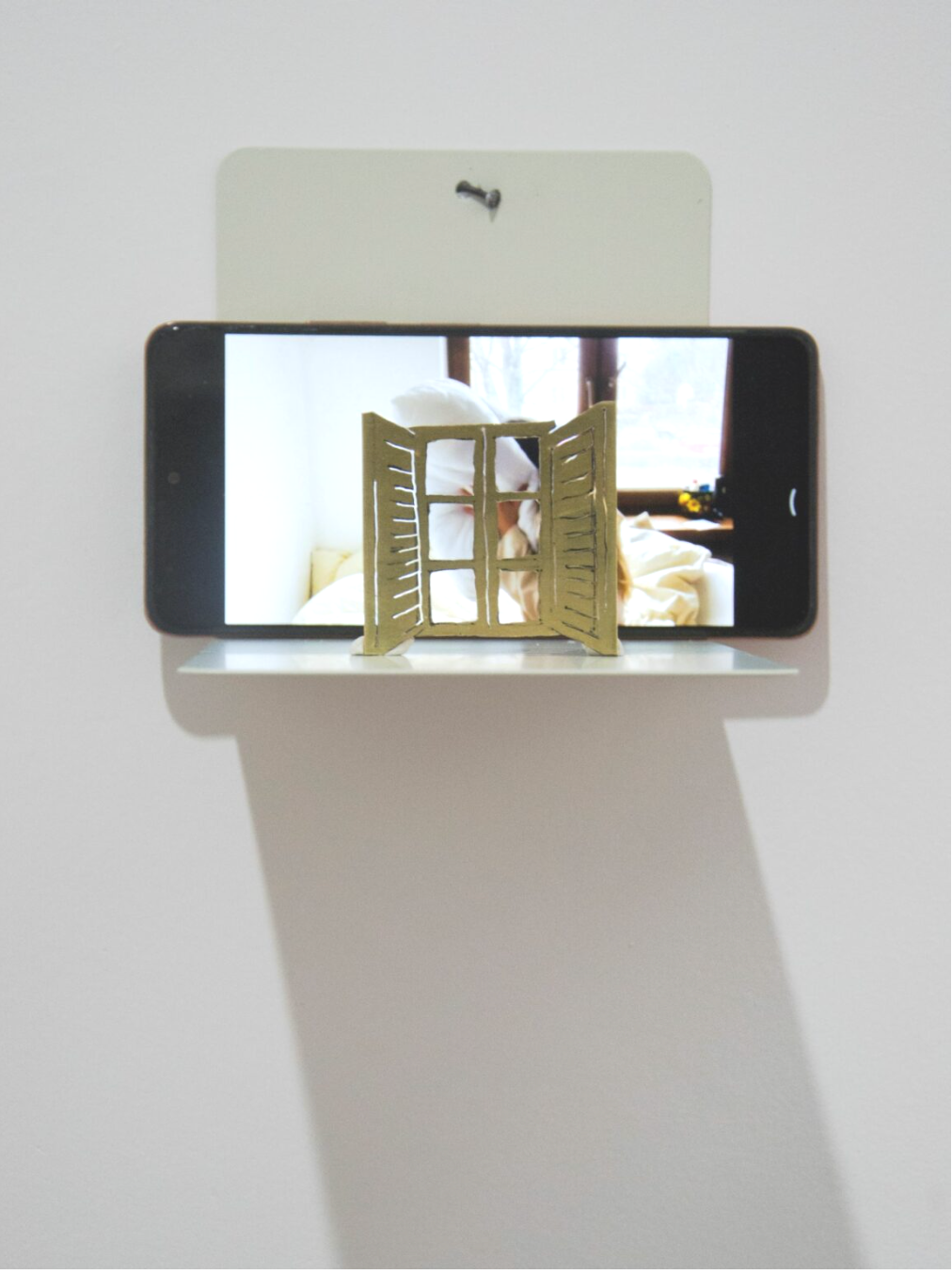
Tacet, 2025, installation, video , smartphone, laton. Photo © Sylwia Wirska
-
![]()
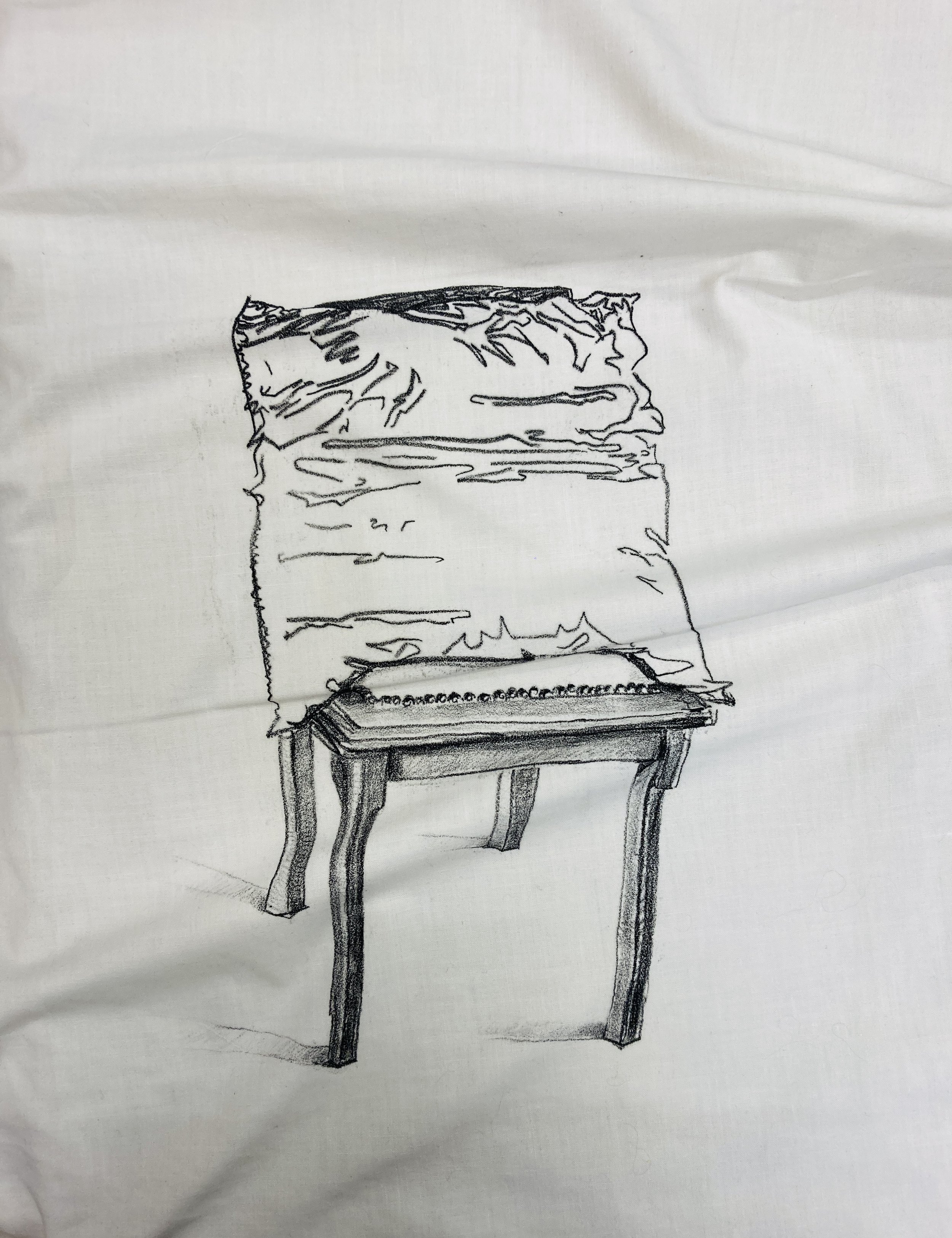
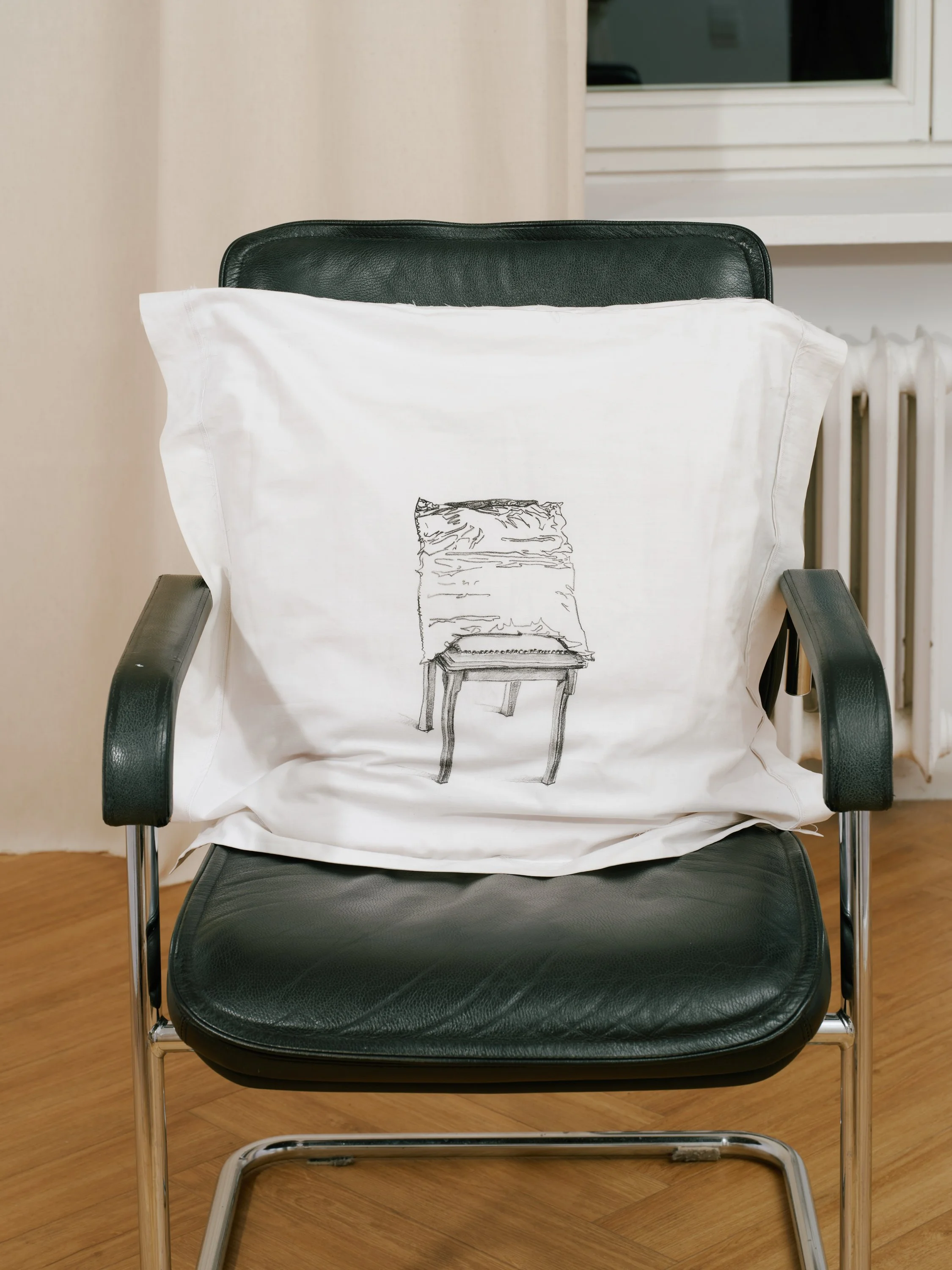
Detail, Conversation Piece, 2025, pillow case, lithography, 55x55cm
-
![]()
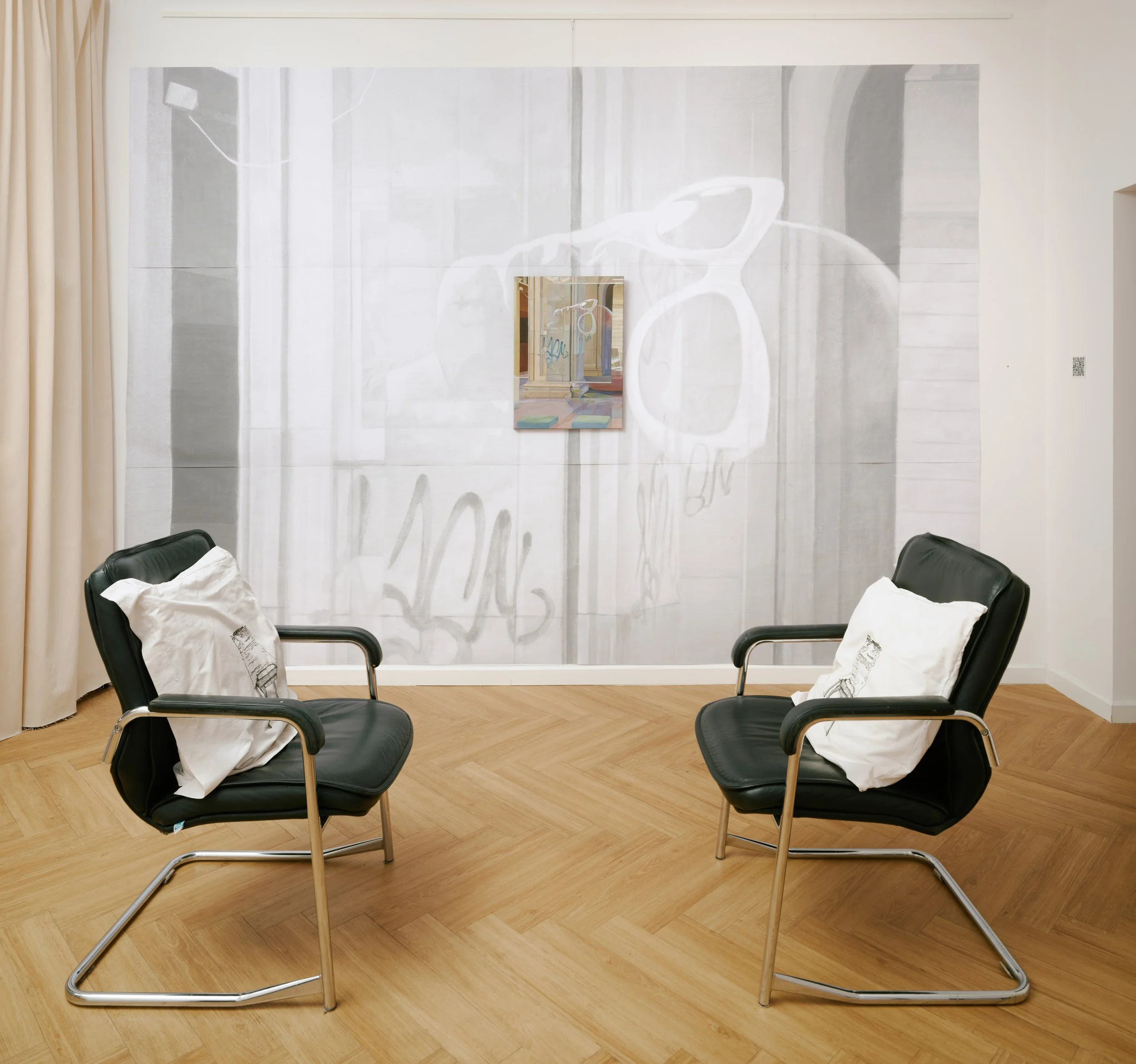
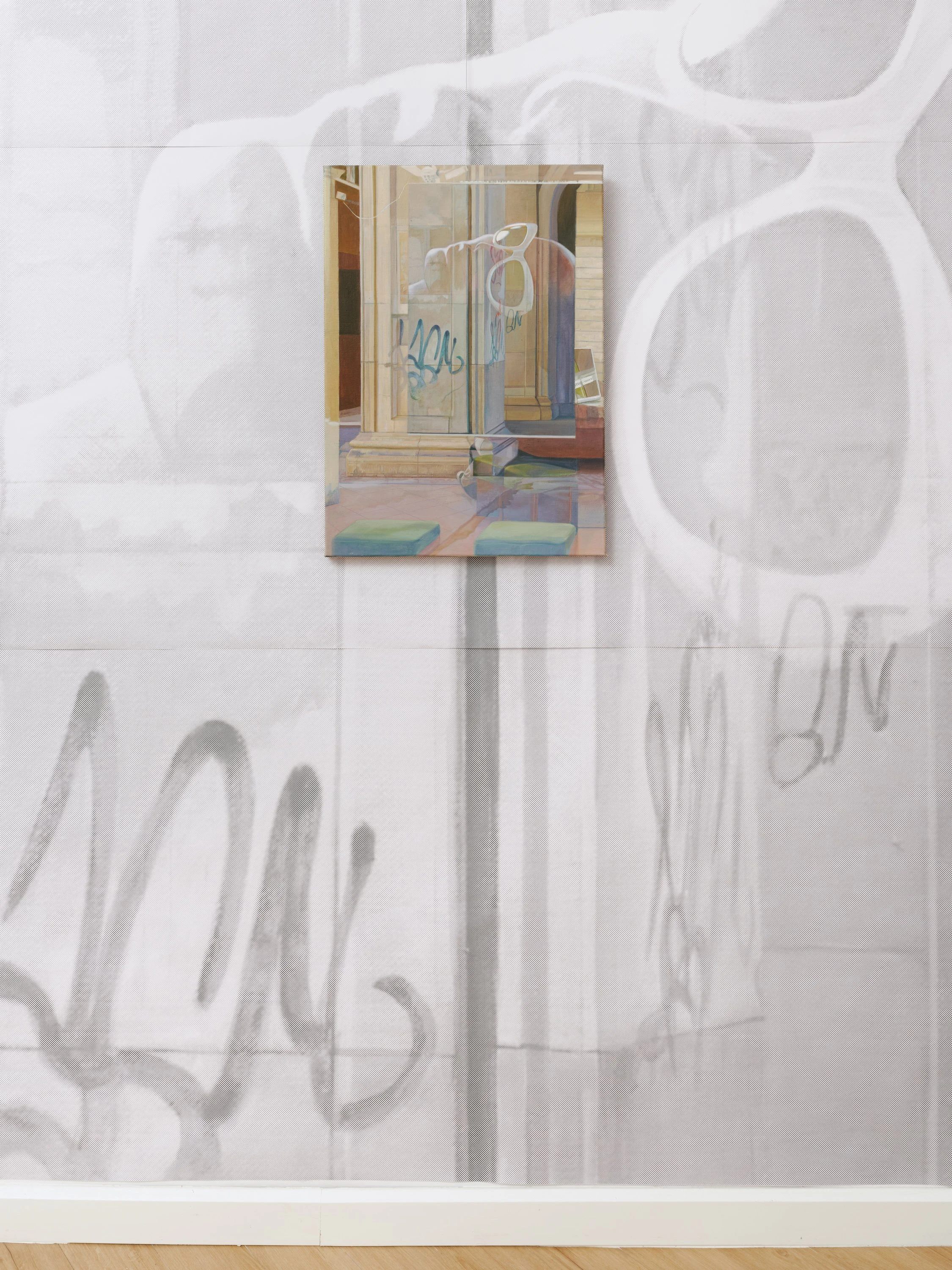
Conversation piece 2025 installation, two pillow cases, 55×55 cm each, cotton, two chairs (variable) Painting by Sylwia Wirska 'Sleepwalkers parade' 2025 oil on canvas, 50×70 cm
-
![]()
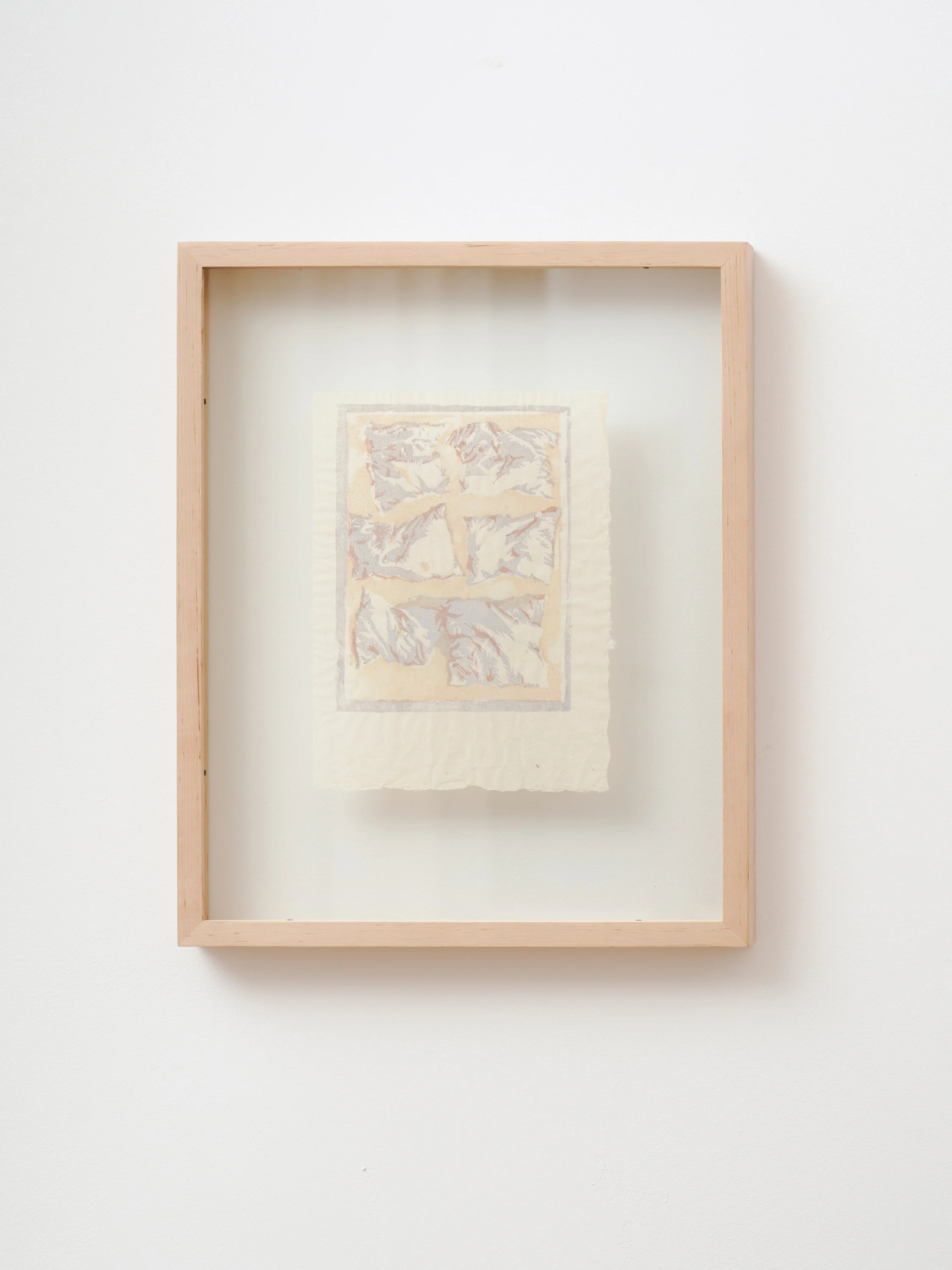
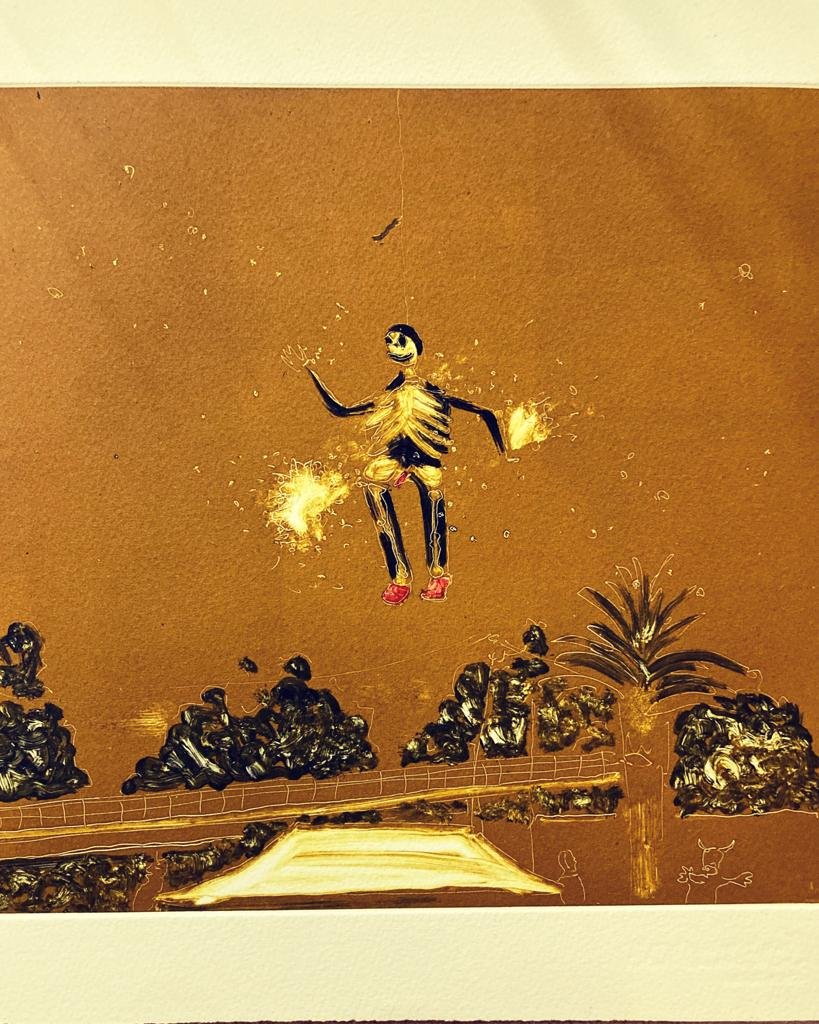
Untitled 2025 Japanese woodblock print (Moku Hanga), Kozo paper, 17 x 23 cm
-
![]()
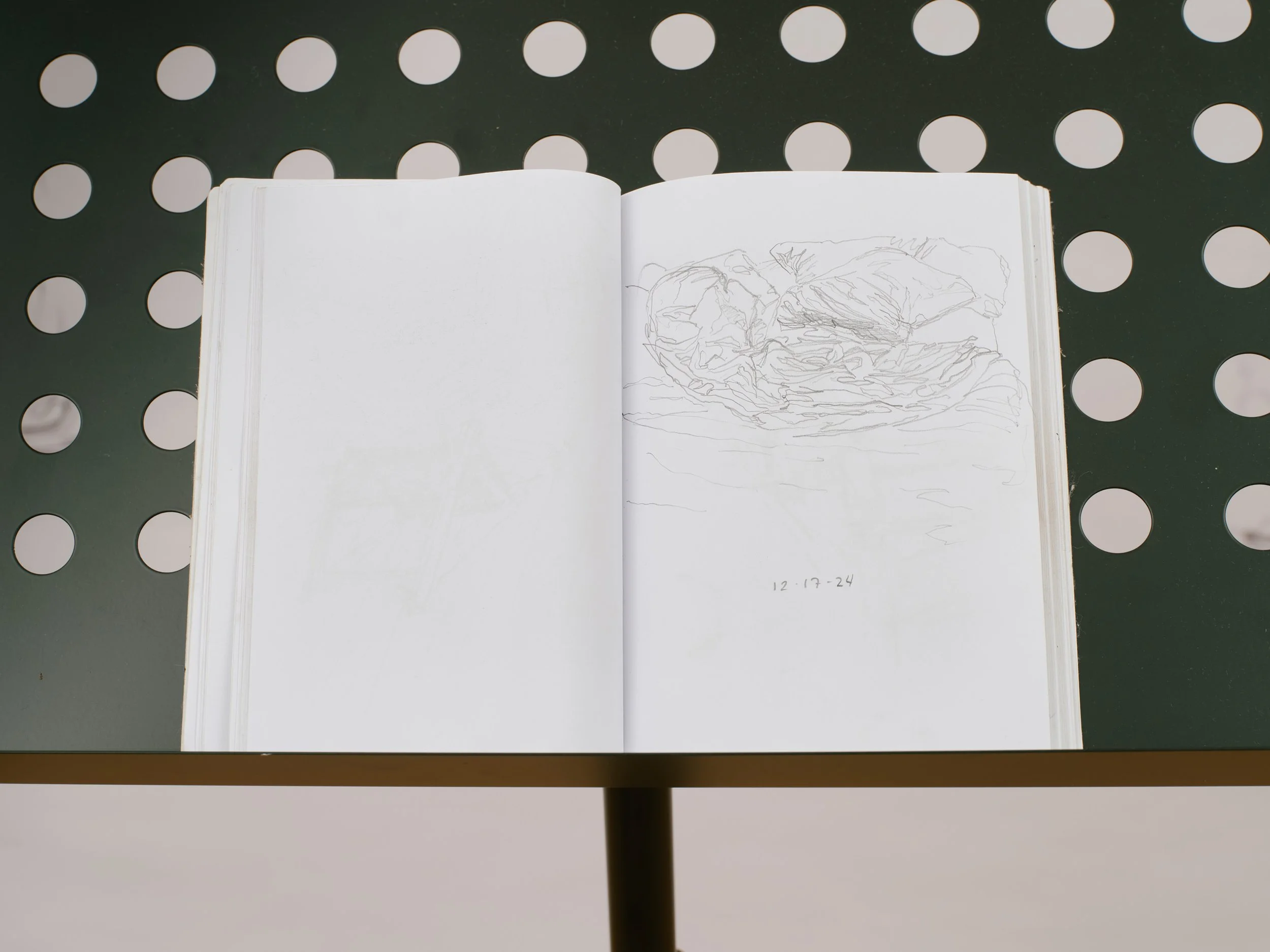
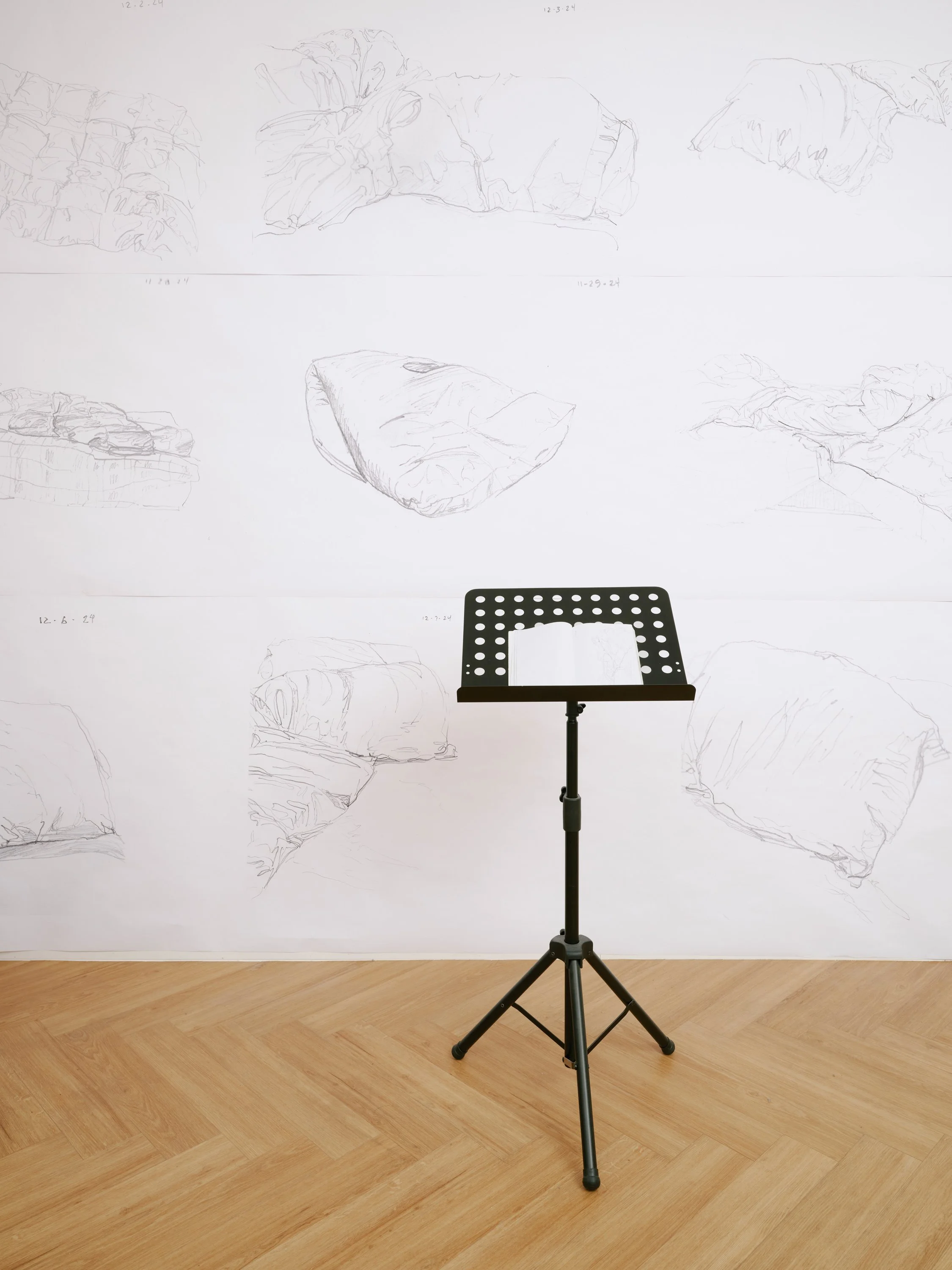
Pillow Sketchbook
-
![]()
Every day starting in November of 2024, the artist spent the first waking hours drawing pillows slept on the night before. A work of therapeutic pathos, avoiding news brodcasts upon waking, tangible traces of thought and dream.
-
![]()
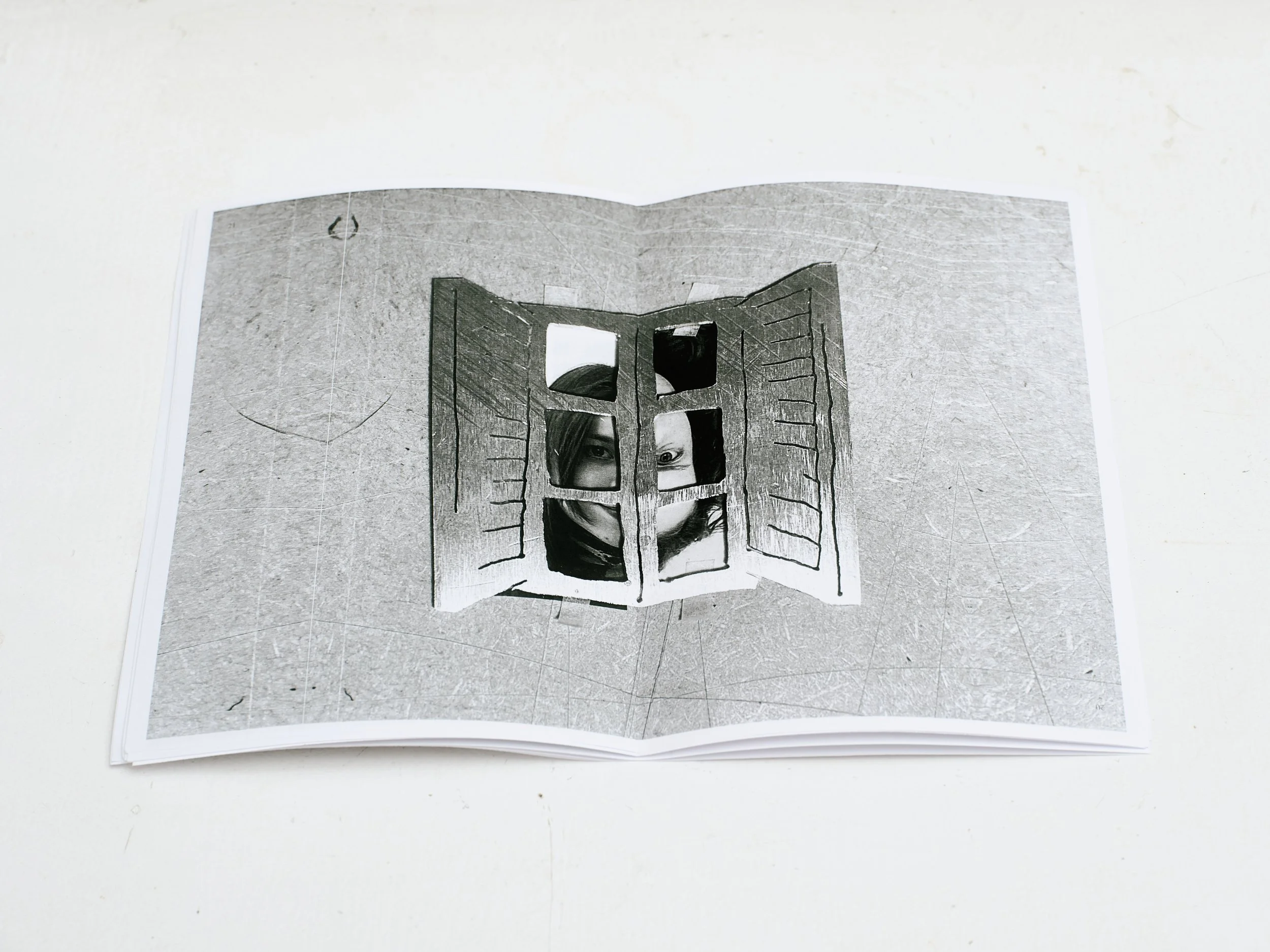
Exhibition zines
-
![]()
Sylwia Wirska, DFC - distant friendship compacts, 2025, 2 vintage mirrors, photos, print
-
![]()
Sylwia Wirska 'Sleepwalkers Parade', 2025 oil on canvas, 50×70 cm
-
![]()
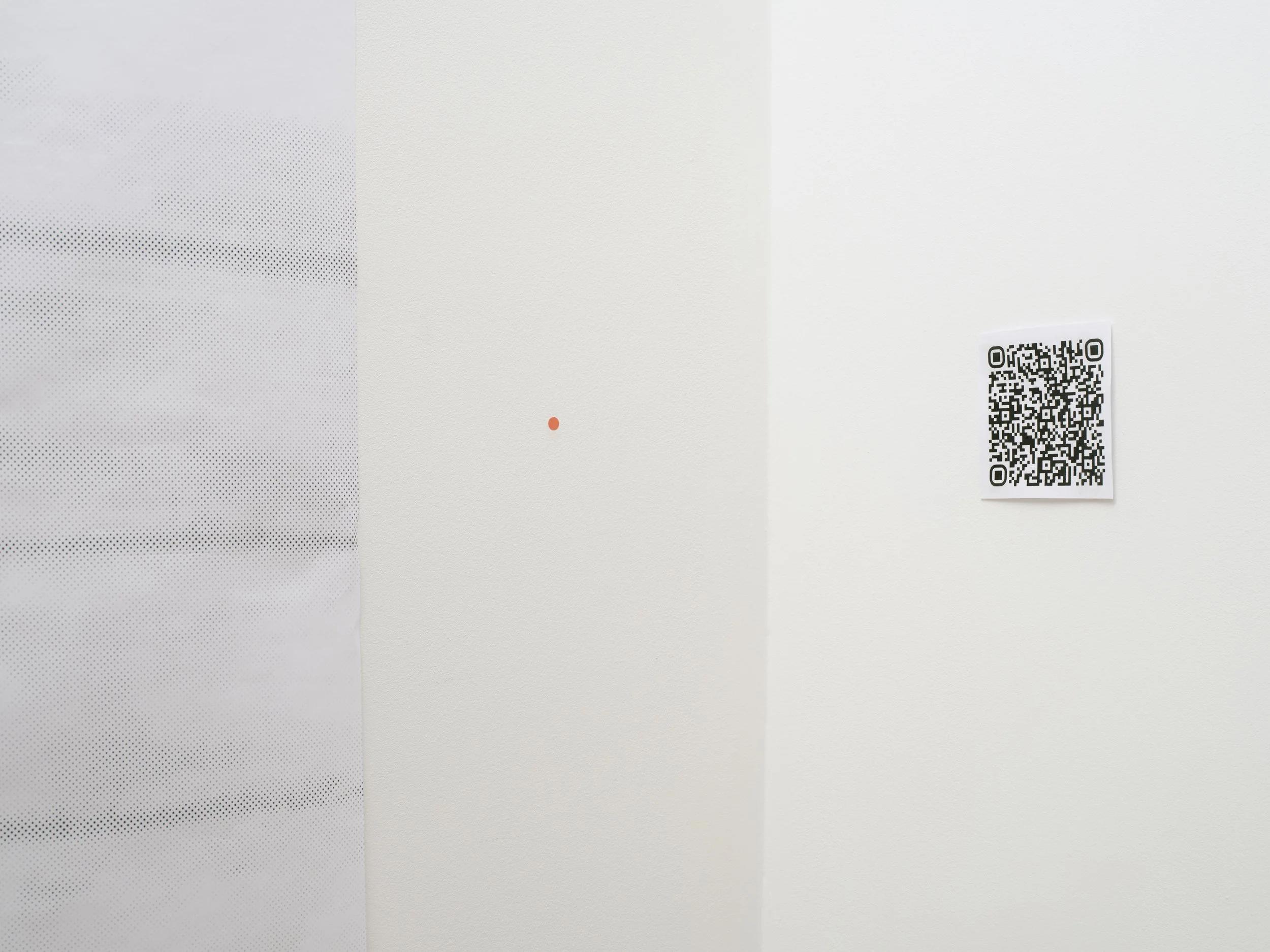
(left) C.V. Brumund & Sylwia Wirska, Sold. (We will not make any more boring art) 2025 sticker, 5×5 mm. (right) Sylwia Wirska The price of the painting 2025 Digital file, 1000 x 15000 pixels
-
![]()
Sylwia Wirska 'Deja Vu' 2015, Oil on canvas 50 x 60 cm
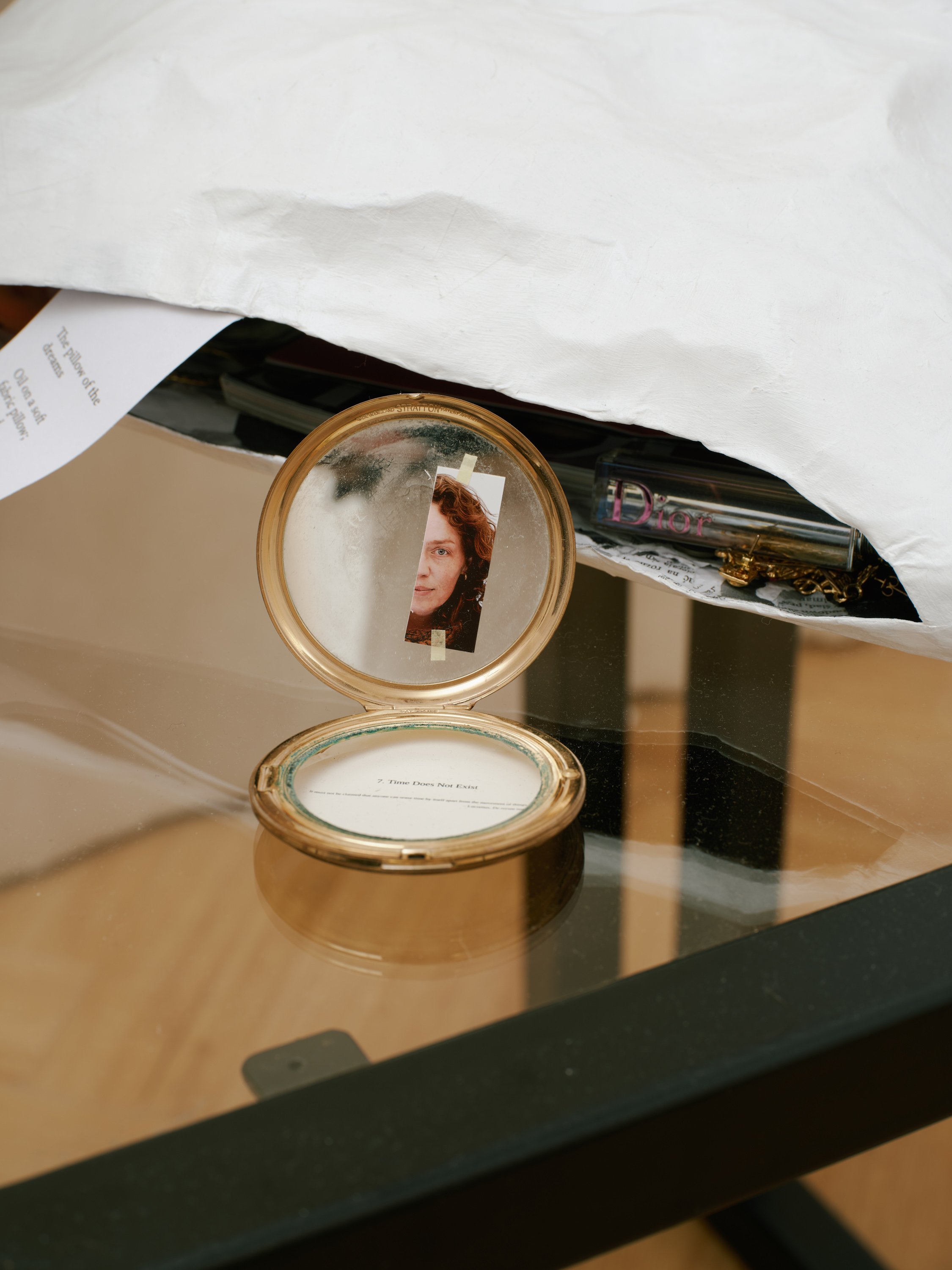
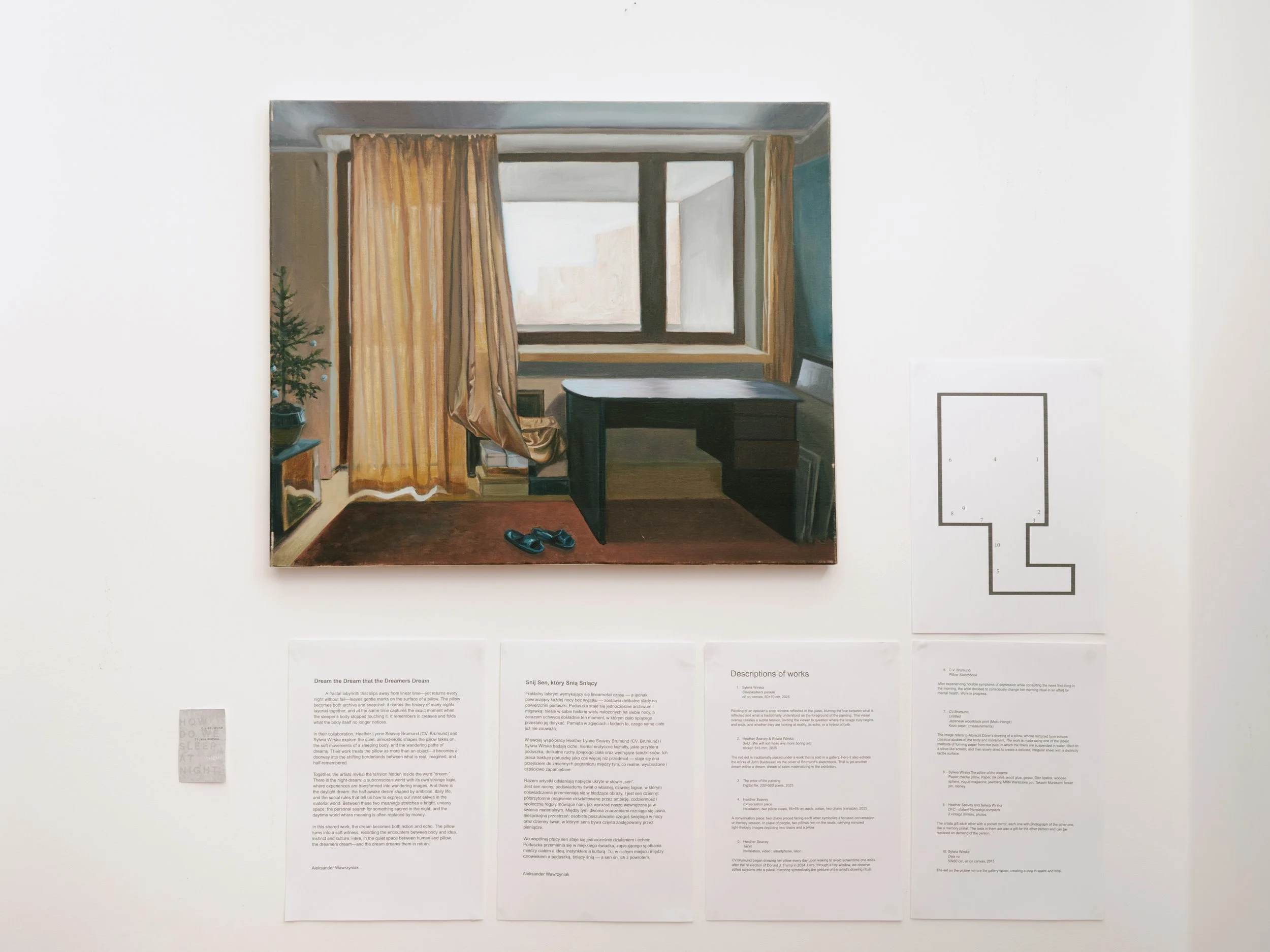
Dream the Dream that the Dreamers Dream
A fractal labyrinth that slips away from linear time—yet returns every night without fail—leaves gentle marks on the surface of a pillow. The pillow becomes both archive and snapshot: it carries the history of many nights layered together, and at the same time captures the exact moment when the sleeper’s body stopped touching it. It remembers in creases and folds what the body itself no longer notices.
In their collaboration, Heather Lynne Seavey Brumund (CV. Brumund) and Sylwia Wirska explore the quiet, almost-erotic shapes the pillow takes on, the soft movements of a sleeping body, and the wandering paths of dreams. Their work treats the pillow as more than an object—it becomes a doorway into the shifting borderlands between what is real, imagined, and half-remembered.
Together, the artists reveal the tension hidden inside the word “dream.” There is the night-dream: a subconscious world with its own strange logic, where experiences are transformed into wandering images. And there is the daylight dream: the half-awake desire shaped by ambition, daily life, and the social rules that tell us how to express our inner selves in the material world. Between these two meanings stretches a bright, uneasy space: the personal search for something sacred in the night, and the daytime world where meaning is often replaced by money.
Aleksander Wawrzyniak
-
![]()
"...Never in my life had I felt myself so near that porous line where my own body was done with and the roots and the stems and the flowers began." -Mary Oliver from the poem, 'White Flowers'
-
![]()
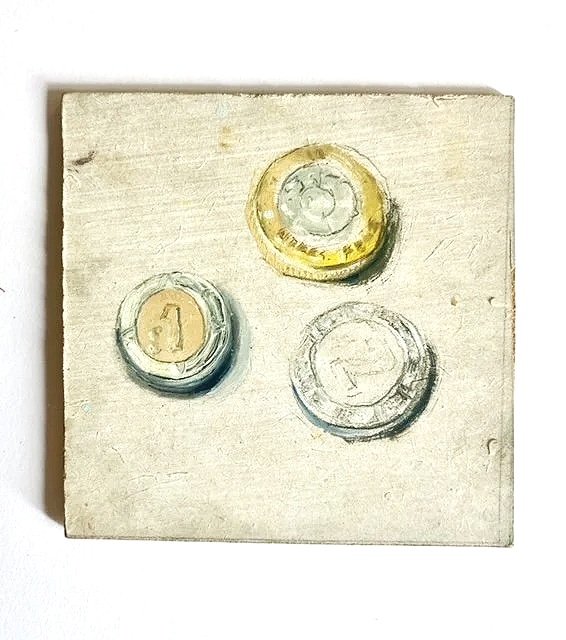
13 PMX. 2020. oil on wood panel. 10cm x 10cm. (SOLD)
-
![]()
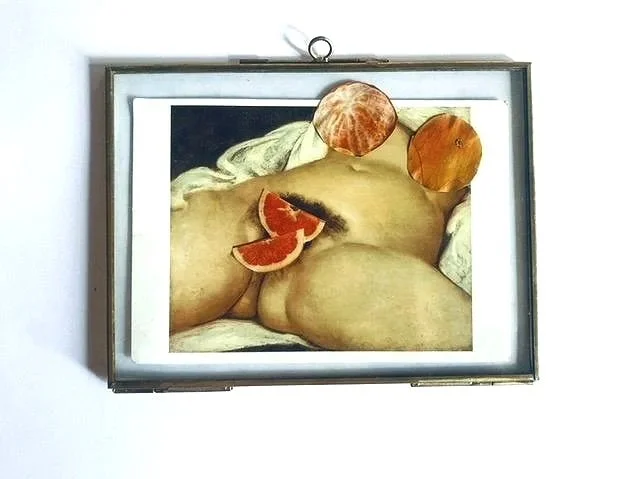
forbidden fruits. 2024. collage: postcard, cupon cutouts. 10cm x 15cm . (SOLD)
-
![]()
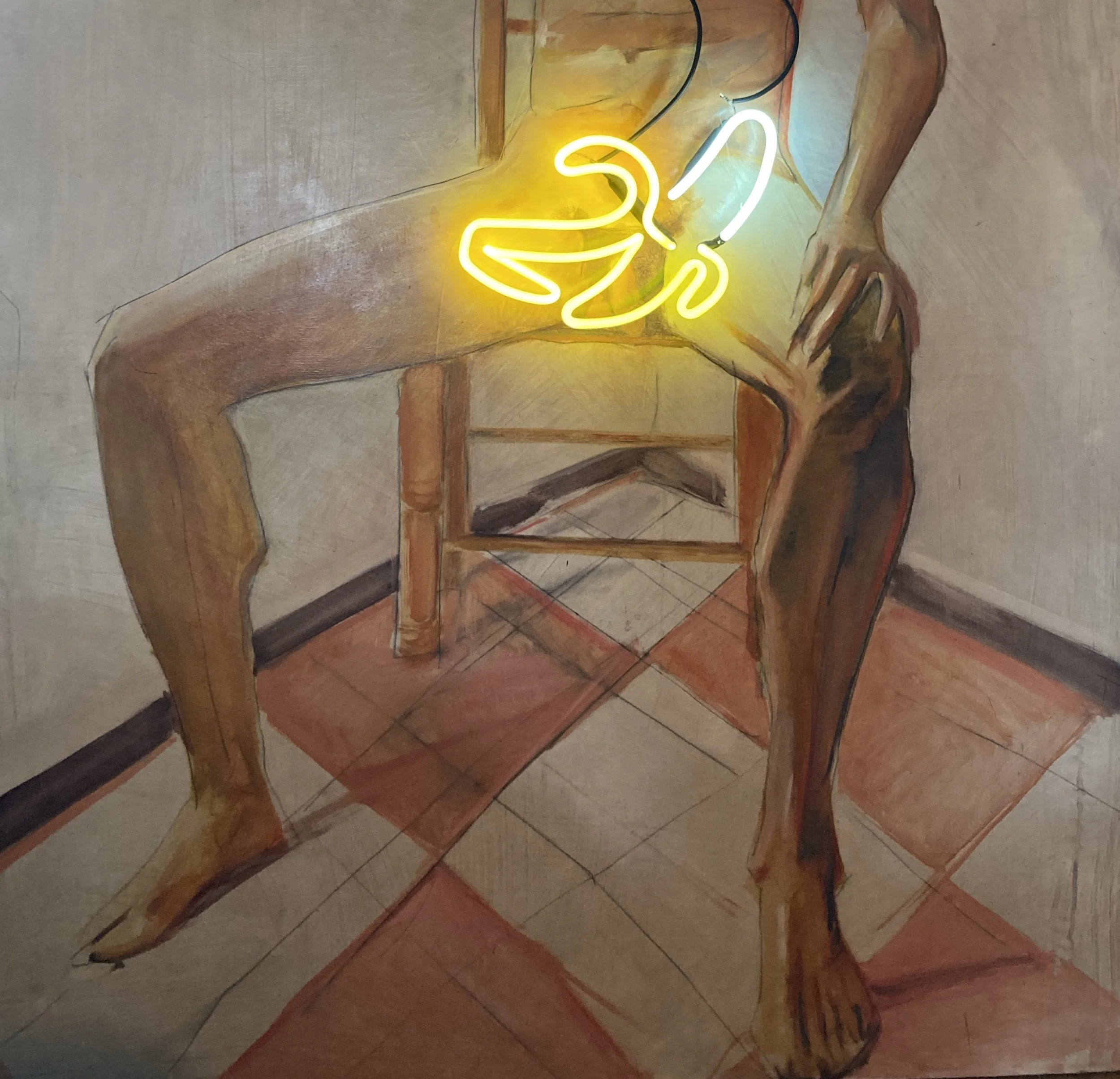
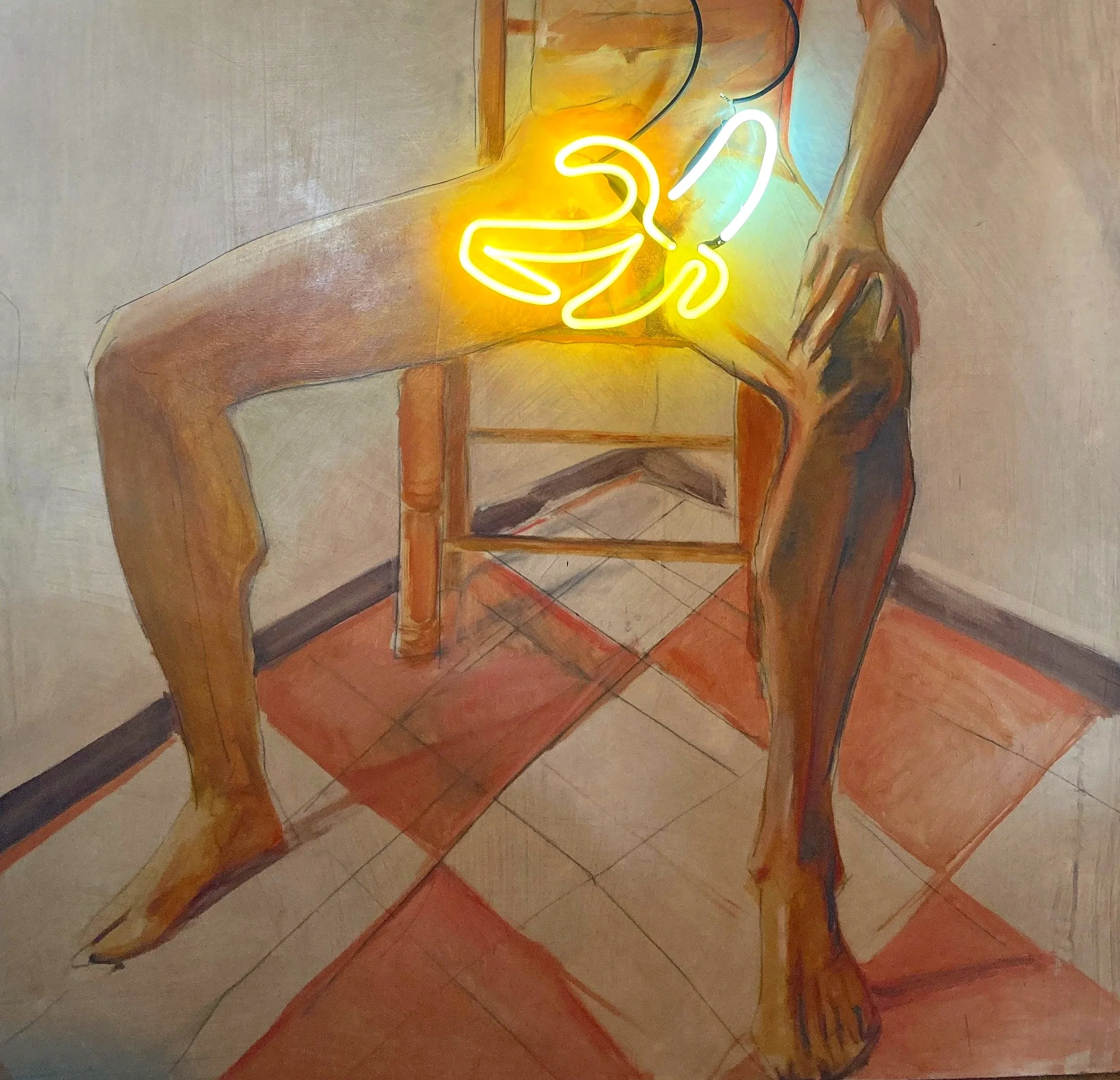
Platano macho . 2018. mixed media: neon, oil on wood panel. 100cm x 95cm. 50,000PMX.
-
![]()
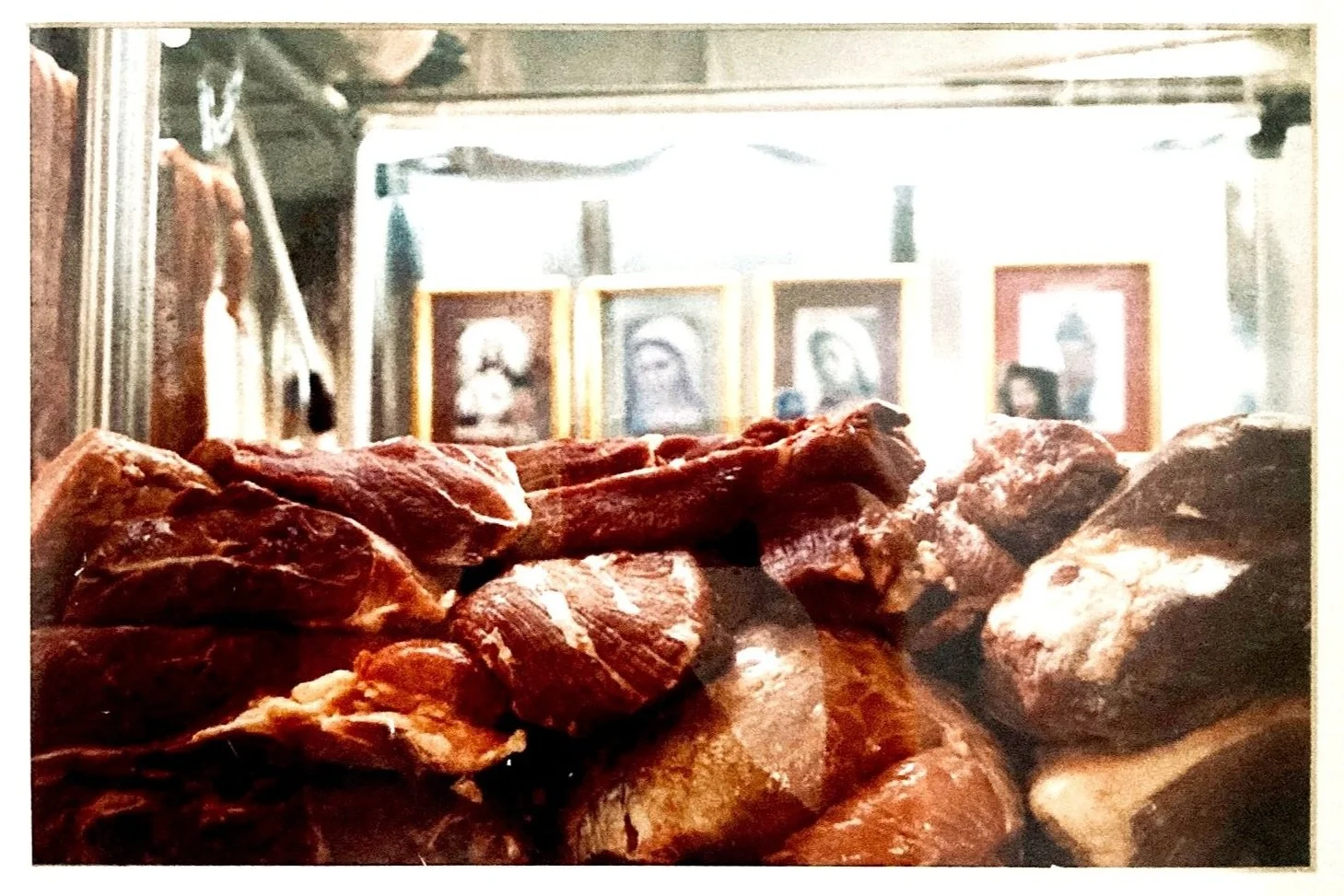
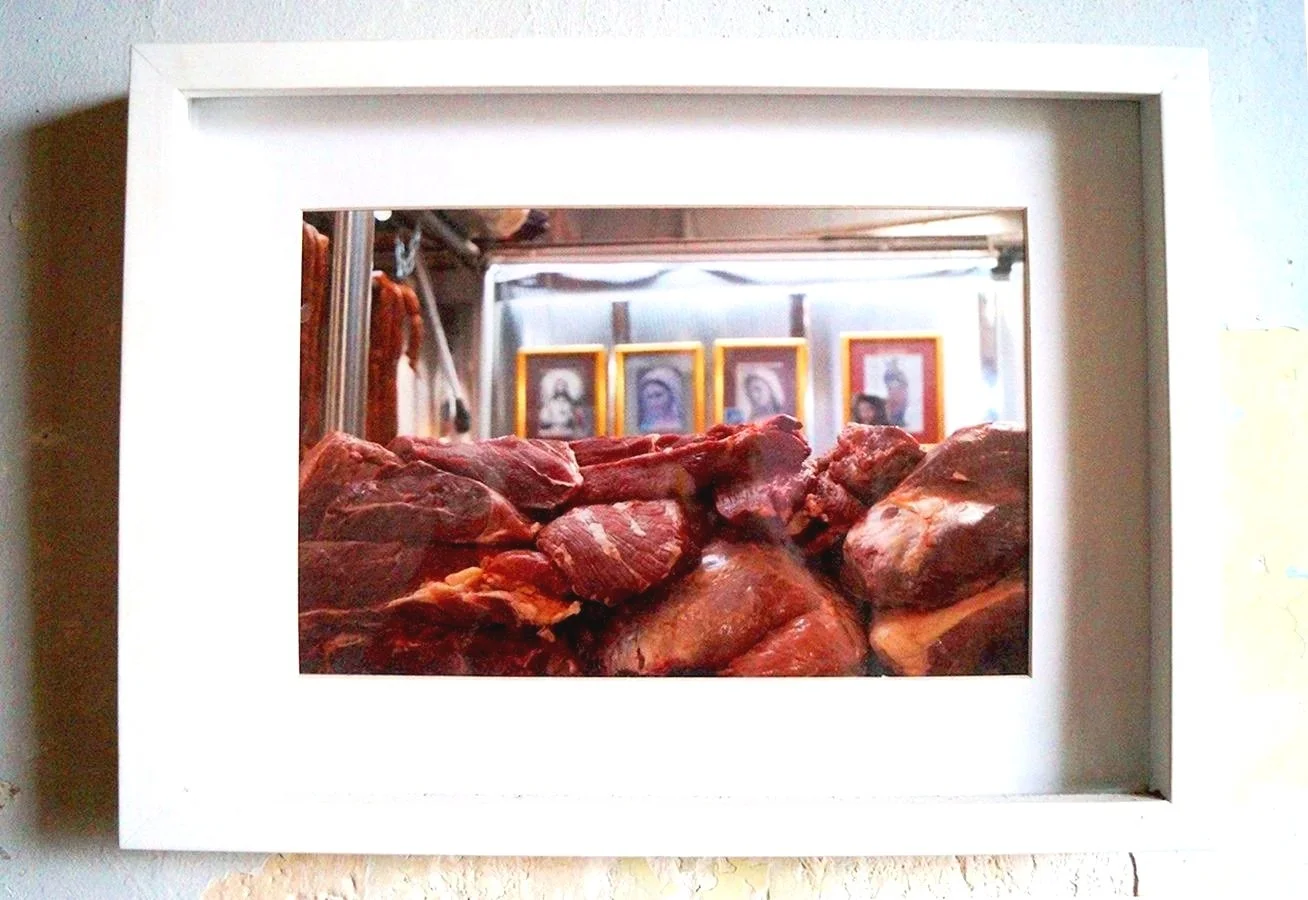
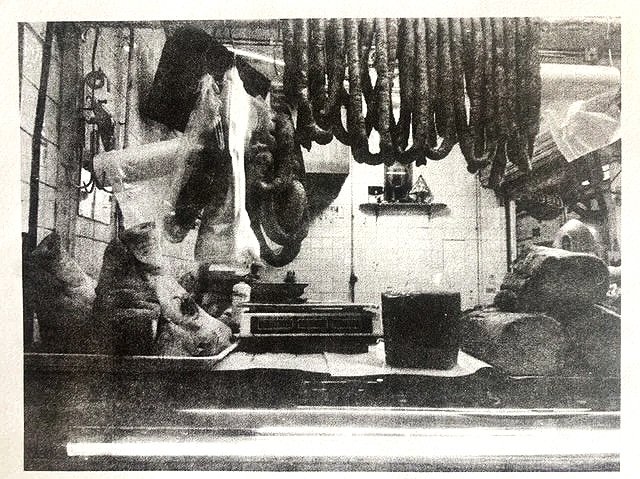
meat market. 2017. digital photography. 32cm x 42.5cm. 4,000PMX.
-
![]()
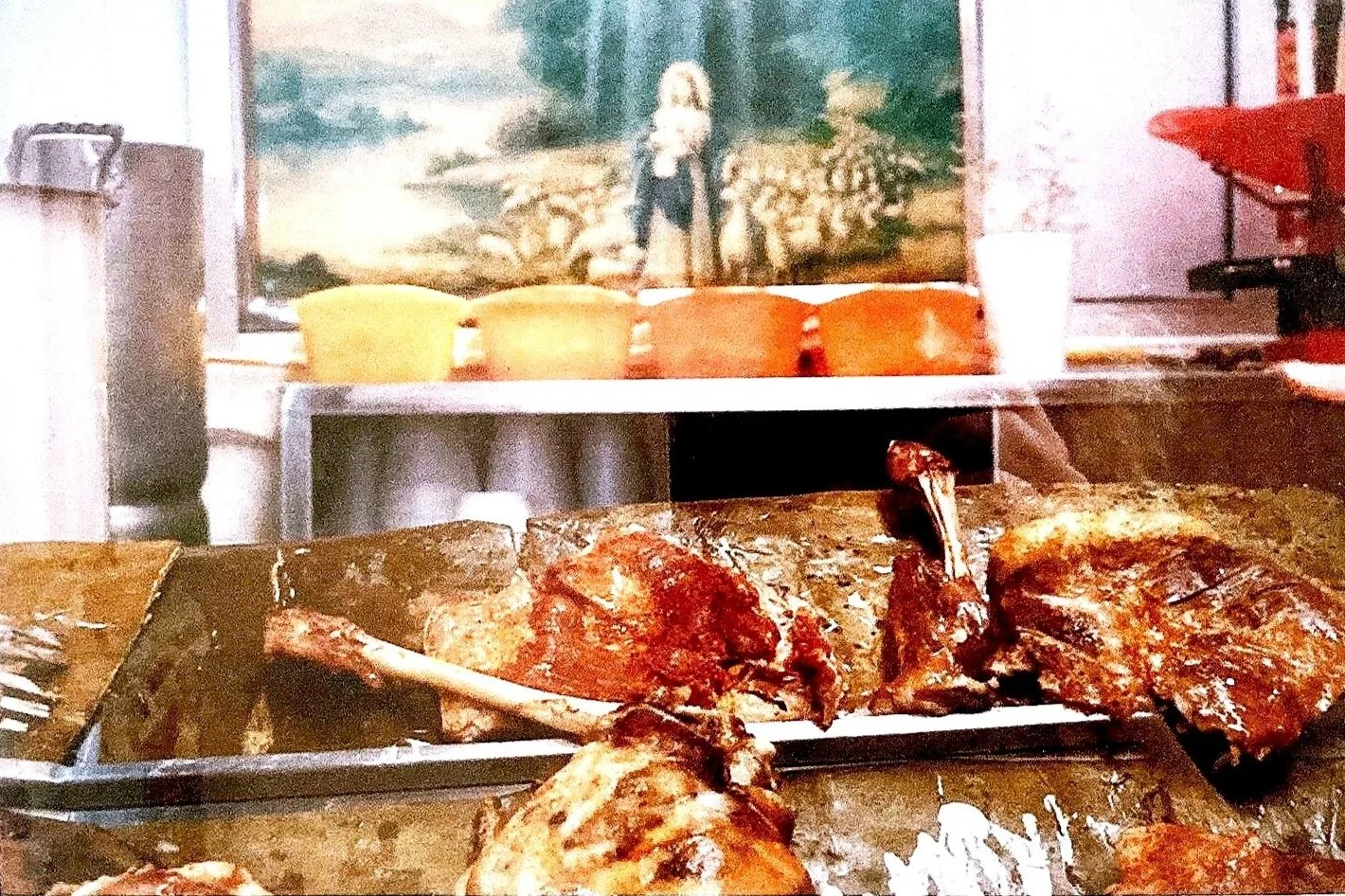
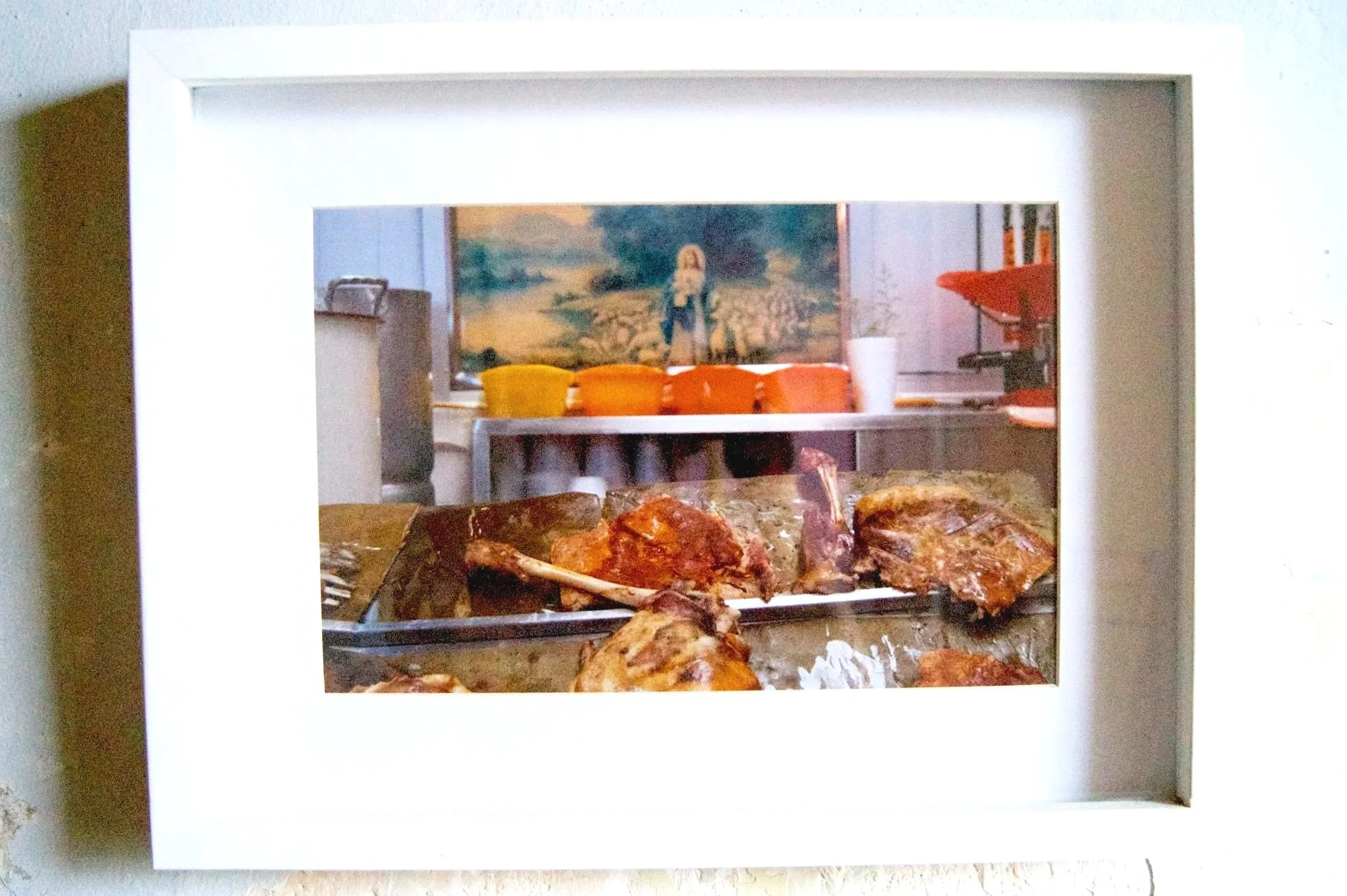
the lamb of god. 2017. digital photography. 32cm x 42.5cm. 4,000PMX.
-
![]()
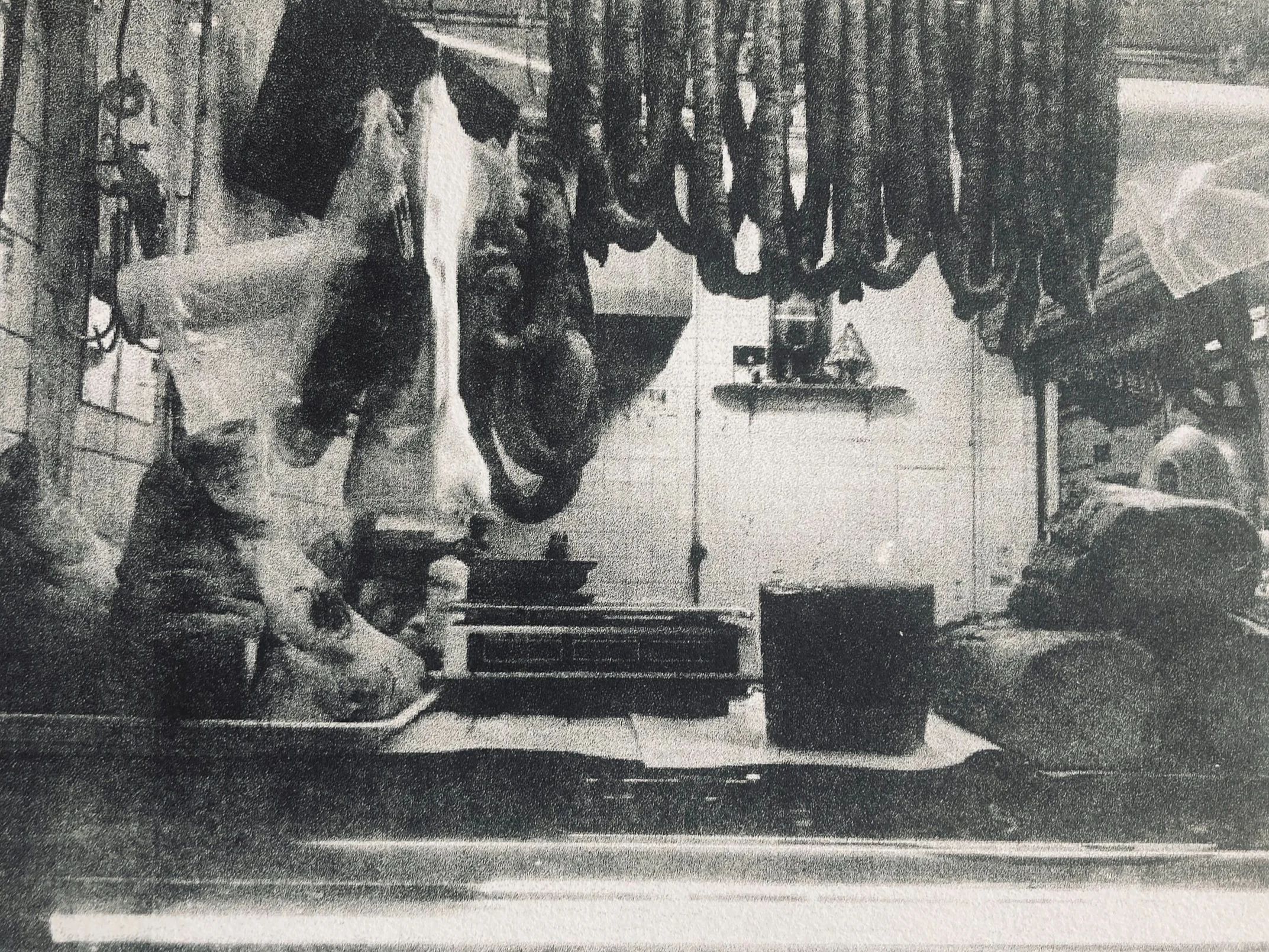
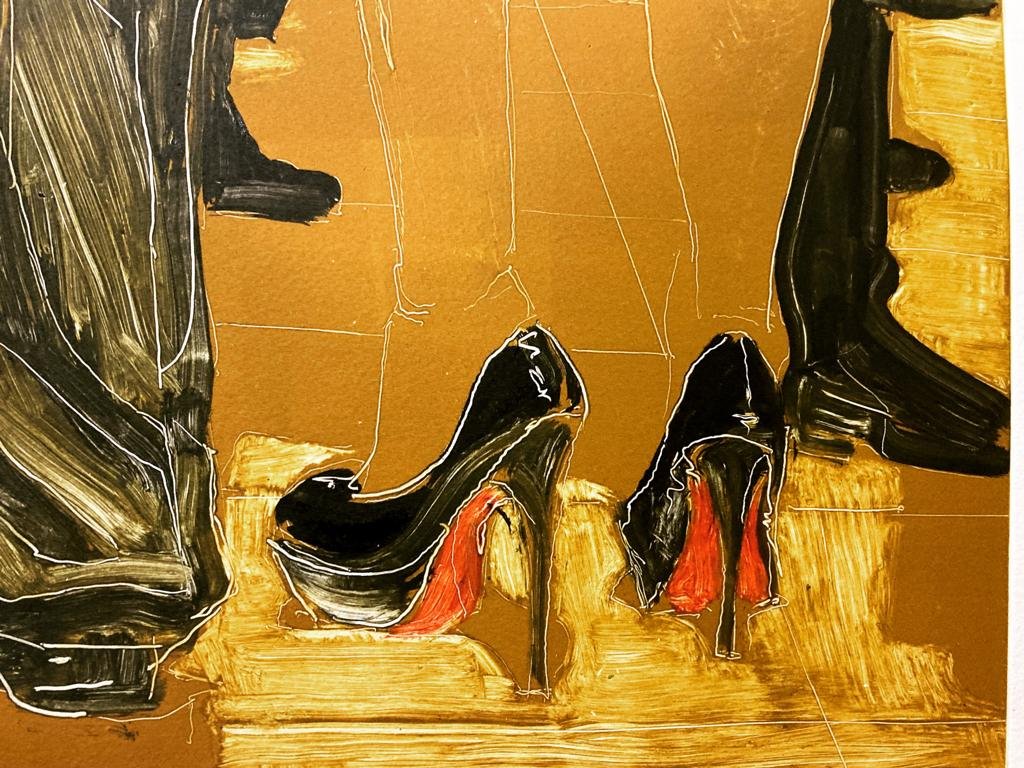
cabeza y virgen con salchica. 2023. lithograph. 23 cm x 28 cm. 4,000 PMX.
-
![]()
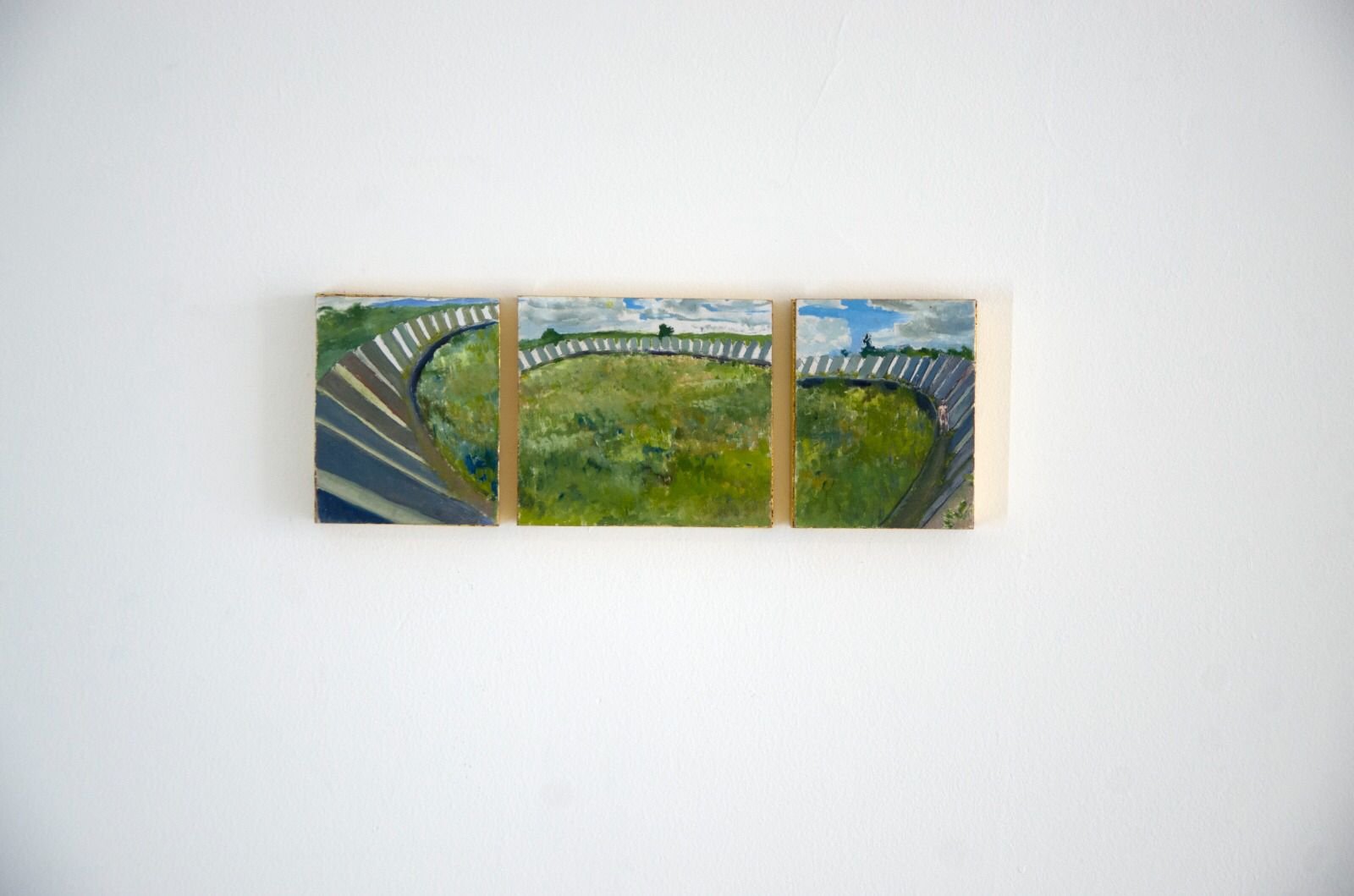
Espacio Escultórico II, (detail) 2023. óleo sobre madera, hoja de oro. (tríptico: 13 x 10 cm, 13 x 14.5 cm, 13 x 11 cm) 10,000 PMX.
-
![]()
"Monotipos". 2023. 30x30cm. 6,000PMX.
-
![]()
"Monotipos". 2023. 30x30cm. 6,000 PMX.
-
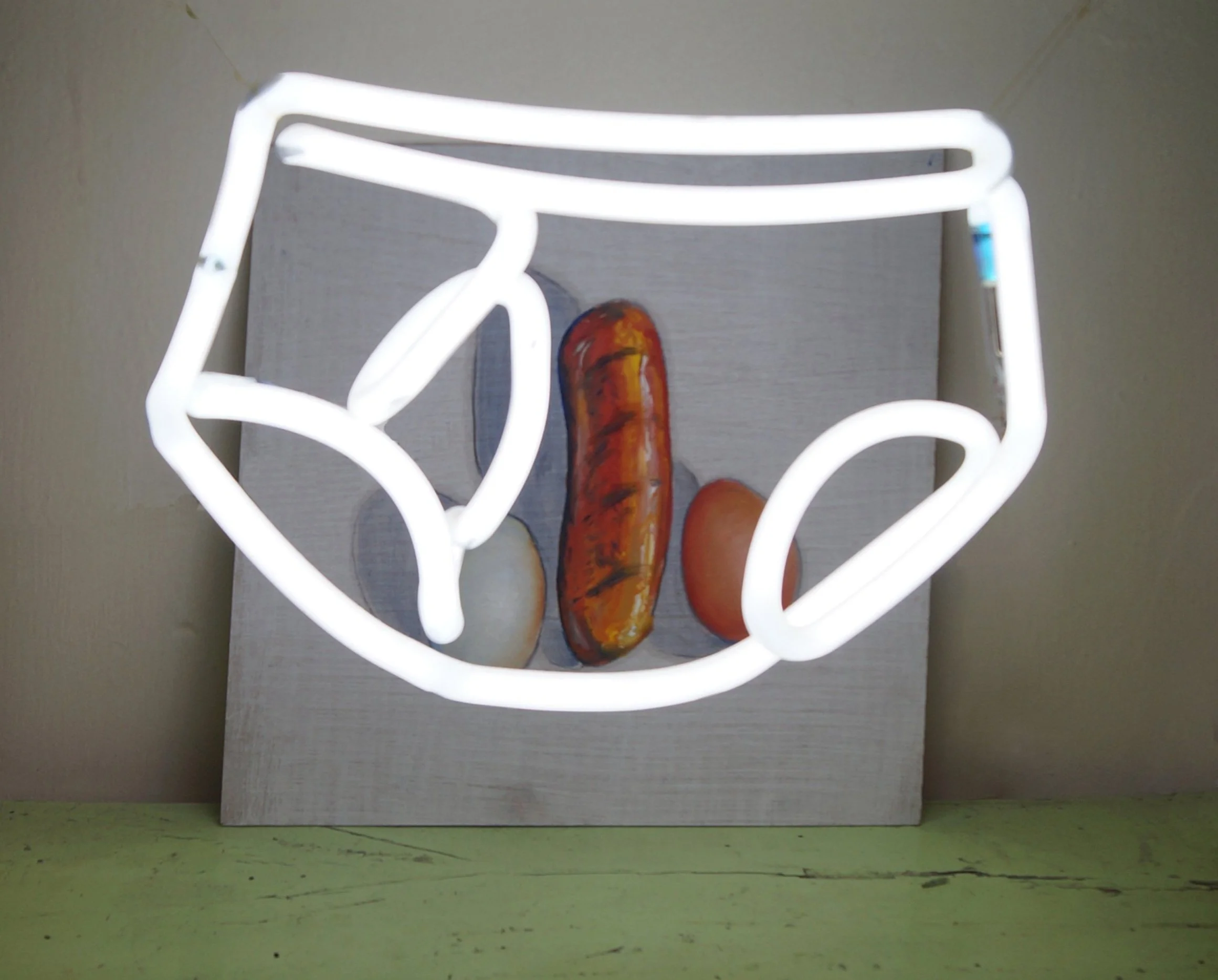
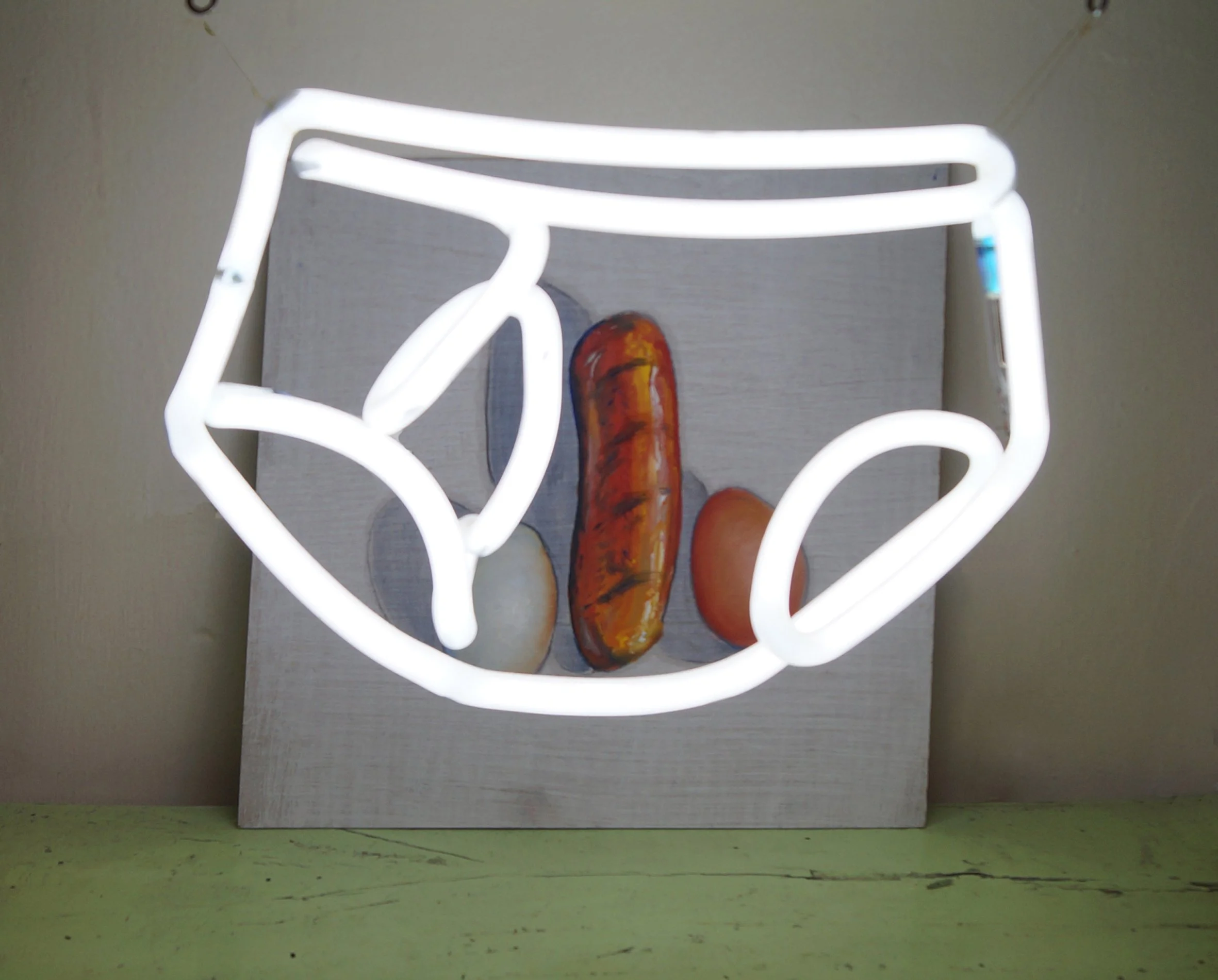
![sausage and eggs. 2017. mixed media : neon , oil on wood panel. 30 cm x 30 cm.]()
sausage and eggs. 2017. mixed media : neon , oil on wood panel. 30 cm x 30 cm. 10,000 PMX
-
![]()
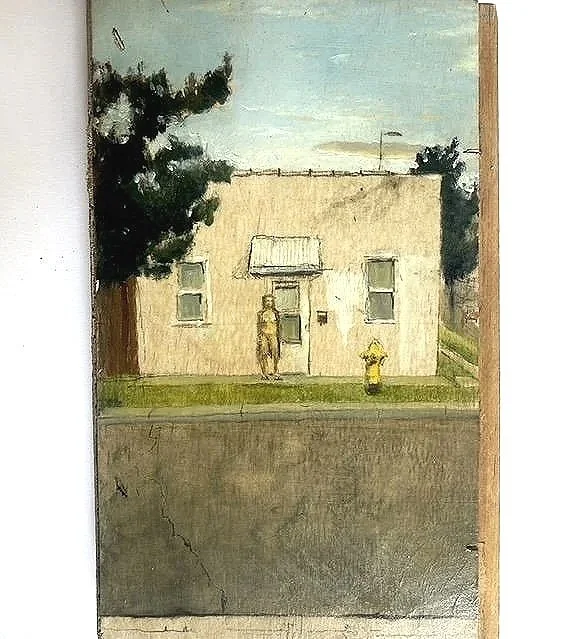
on Federal. 2022 . oil on wood panel. 26cm x 15cm. (SOLD)
-
![]()
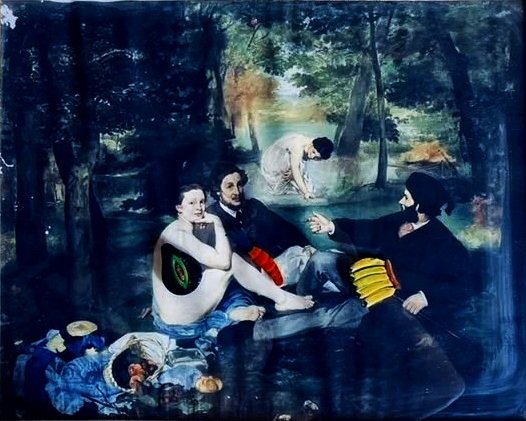
readymade. 2024. mixed media : magnets, lazer printed reproduction of 'dejeuner sur l'herbe'. 46.5cm x 55 cm. 3,000PMX.

Lewd, I find a man
Who likes to fuck without first
Taking his socks off.
-Sarah Marsoobian
(ES.)Nunca en mi vida me sentí tan cerca de esa línea porosa donde mi propio cuerpo llegaba a su fin y comenzaban las raíces, los tallos y las flores.— Mary Oliver del poema "White Flowers".
La exposición individual Frutos Prohibidos de la artista C.V. Brumund presenta una revisión de su obra dedicada a explorar y subvertir, dos temas tradicionales en la pintura: el bodegón o los tableaux vivants y la figura humana, especialmente el desnudo femenino. Las cuerpas femeninas, biológicas o no, continúan provocando sensaciones de intimidación, placer, erotismo, transgresión y límites, a través de actos de intimidad.Así como el mono en Pedro el Rojo*, estos desnudos se presentan a quienes les observan, como posibilidades de metamorfosis, donde el concepto de lo femenino, sin importar su biología de origen, se transforma en la celebración de la libertad. Desnudarse puede ser un acto íntimo, pero su poder político y poético reside en el contexto actual, en donde nuestras cuerpas femeninas se siguen enfrentando a un mundo violentamente binario, convirtiéndonos en un acto de resistencia vivo, a piel. - Valeria Montoya.
*Kafka, F. and Kafka, F. (2010) La metamorfosis ; Informe para una academia. Madrid, España: Edimat Libros.
(EN.) Never in my life had I felt myself so near that porous line where my own body was done with and the roots and the steams and the flowers began.— Mary Oliver, from the Poem White Flowers.
The solo exhibition Frutos Prohibidos (Forbidden Fruit) by artist C.V. Brumund revisits her work exploring and subverting two traditional themes in painting: still life or ‘nature morte’ and the human figure, more specifically, the nude. Female bodies, biological or no, continue to evoke intimidation, pleasure, eroticism, transgression, and impose limits through acts of intimacy. Much like the monkey in Pedro el Rojo* These nudes present themselves to observers as possibilities for metamorphosis, where the concept of the feminine, regardless of its biological origin, is a liberating celebration. To undress can be an intimate act, but the political and poetical power of this action lie in its contemporary context; the nude continues to confront a violently binary world, and as such is a living, breathing embodiment of resistance - in the flesh -. -Valeria Montoya.
*Kafka, F. and Kafka, F. (2010) La metamorfosis ; Informe para una academia. Madrid, España: Edimat Libros.
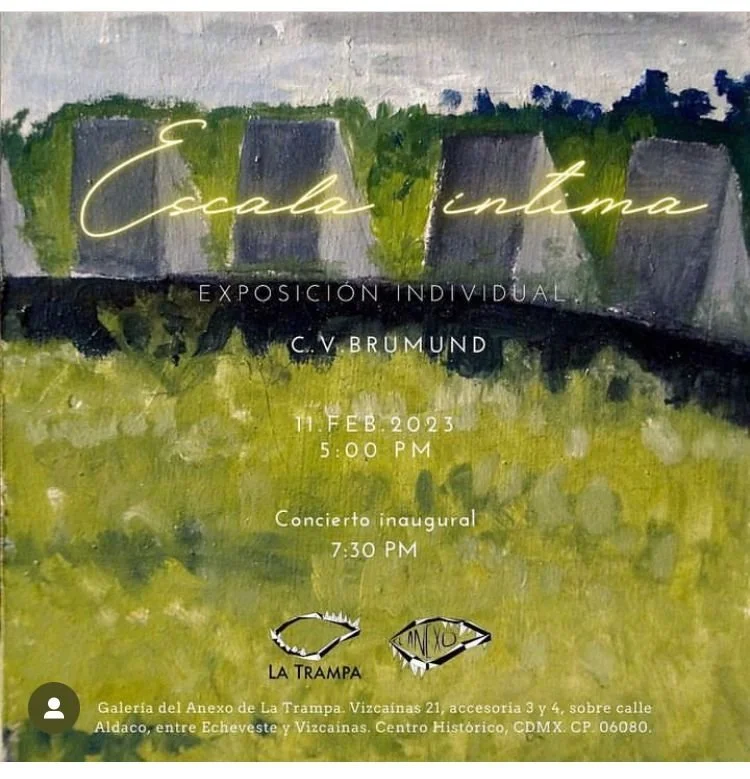
Escala Intima - 11 feb./11 mar. 2023
El Anexo de la Trampa Grafica, CDMX
-
![]()
"With her paintings, C.V. Brumund seems to summon ghosts from the future; stunned witnesses who contemplate the traces of time long passed. She reminds us (like Durer and his ‘allegory of melancholy’ more than five hundred years ago) that the creative act is that desperate and astonishing attempt to find scale in the midst of infinity; the expanse in which we are lost." -Antoine Granier
-
![]()
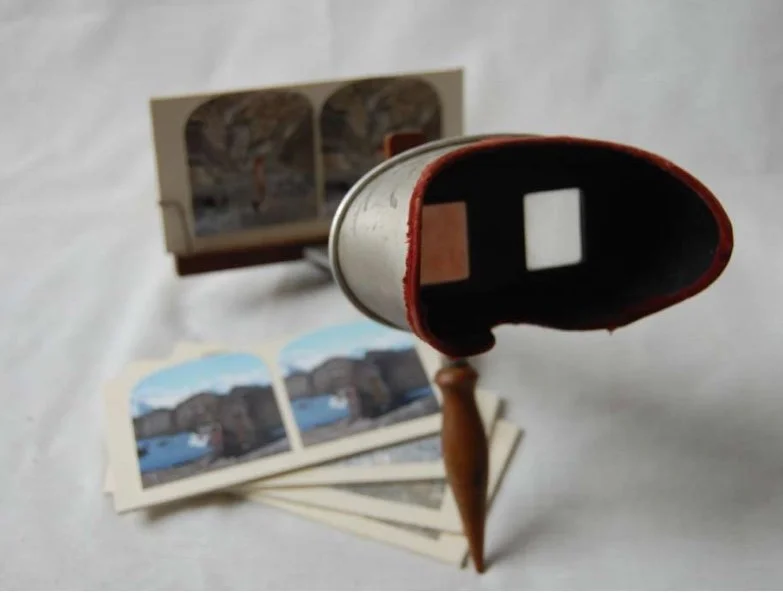
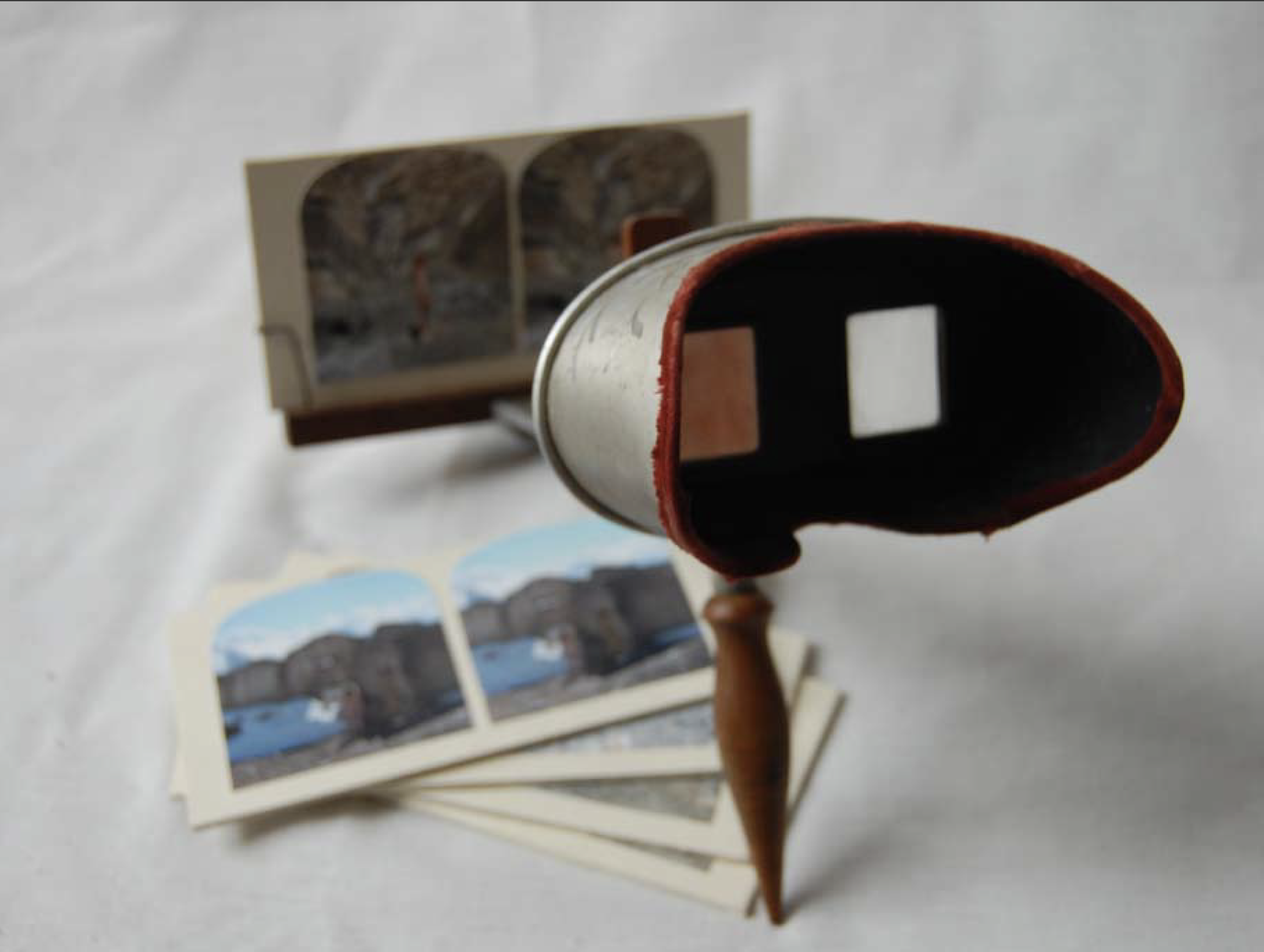
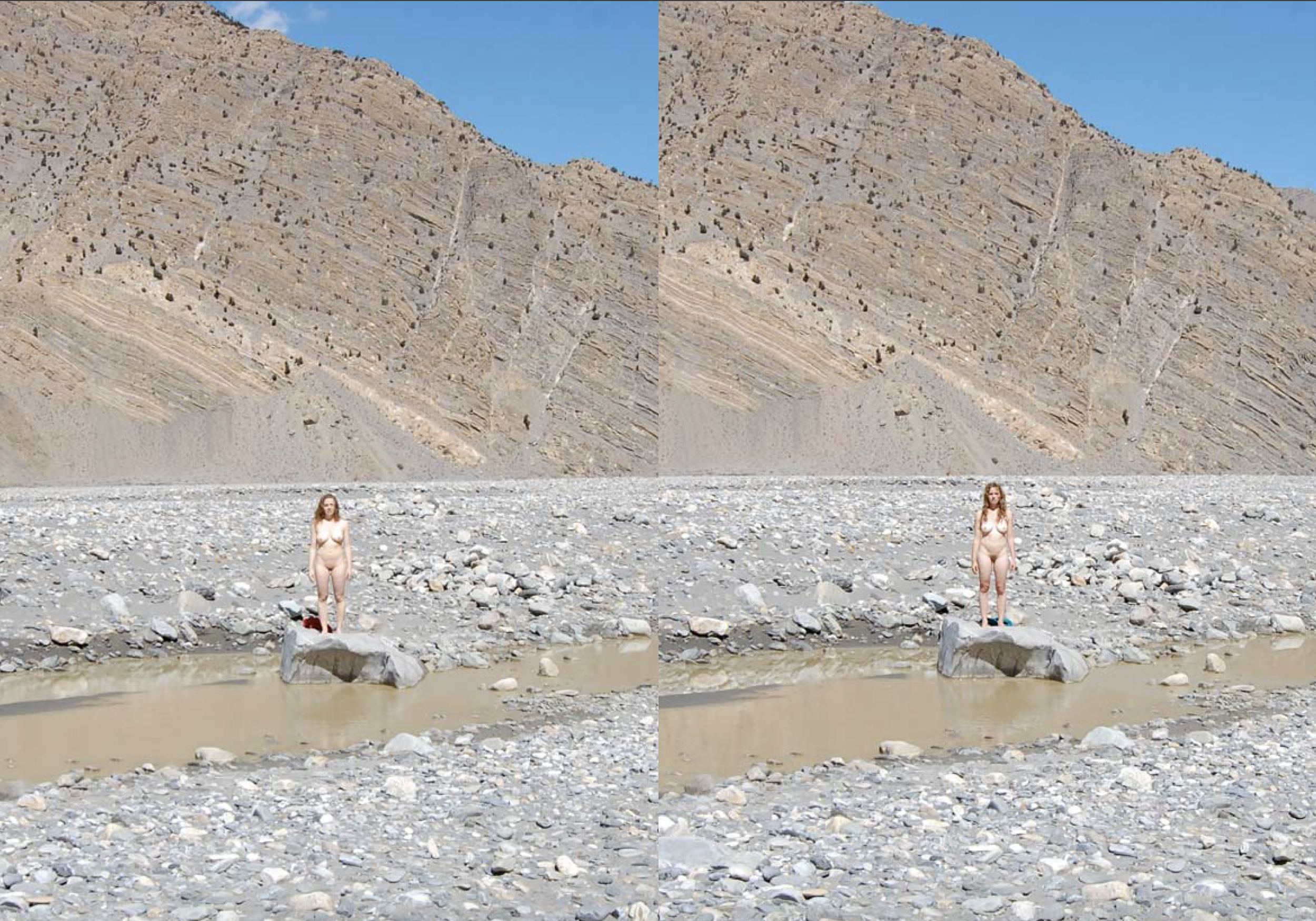
Yamuna and Ghanga (twins). 2013, stereograph, 5 stereografic cards, digital photography. (series of 3). 45cm x 17cm x 8.5cm approx.
-
![]()
Detail .Yamuna and Ghanga (twins). 2013.
-
![]()
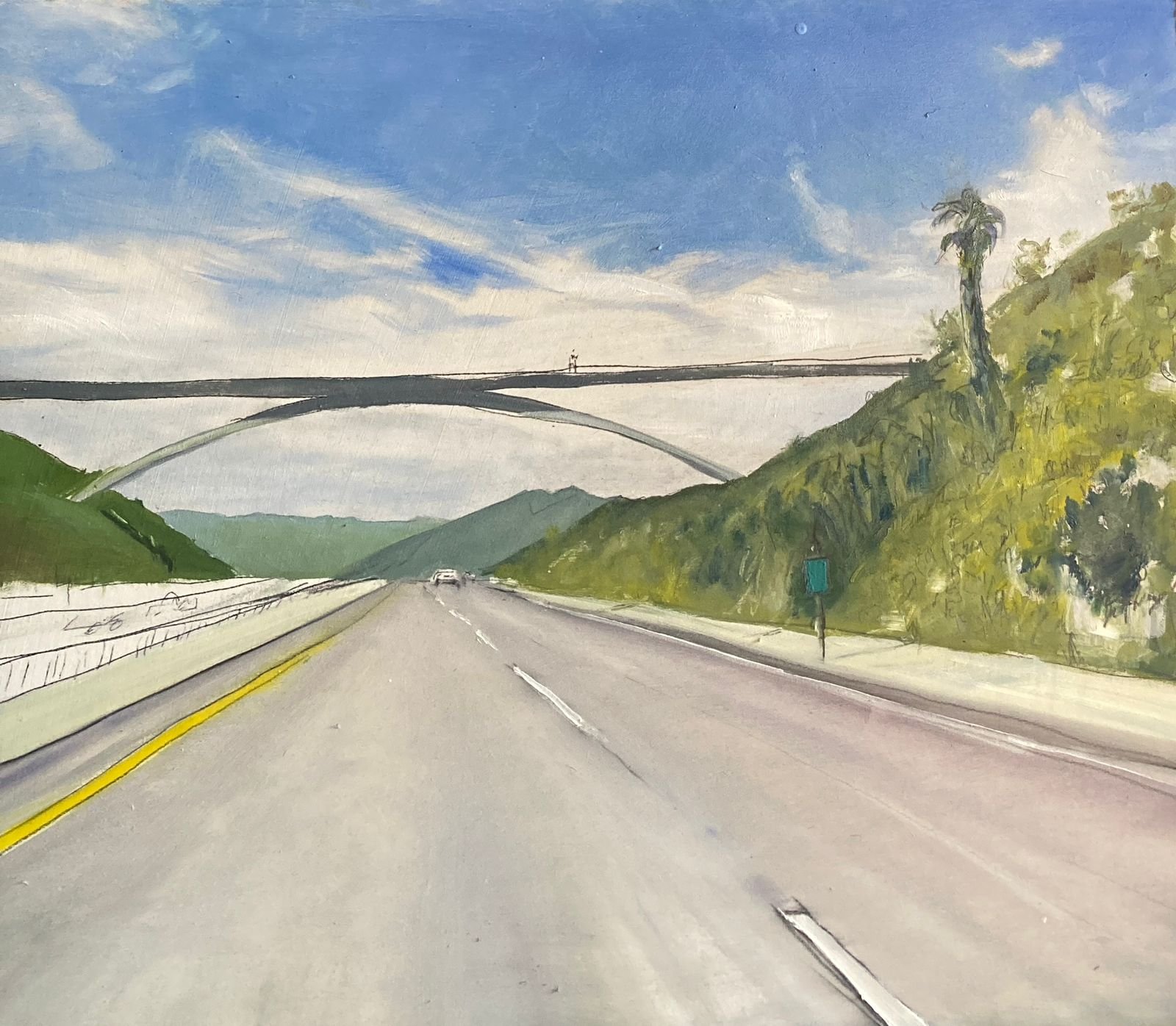
I-15 - The Lilac Road Bridge. 2023. Oil on wood panel. 35 x 55 cm.
-
![]()
Espacio Escultórico I, 2023. Oil on wood panel, gold leaf. (tríptico: 12 x 10 cm, 12 x 14.5 cm, 12 x 11 cm)
-
![]()
Espacio Escultórico II, (detail) 2023. óleo sobre madera, hoja de oro. (tríptico: 13 x 10 cm, 13 x 14.5 cm, 13 x 11 cm)
-
![]()
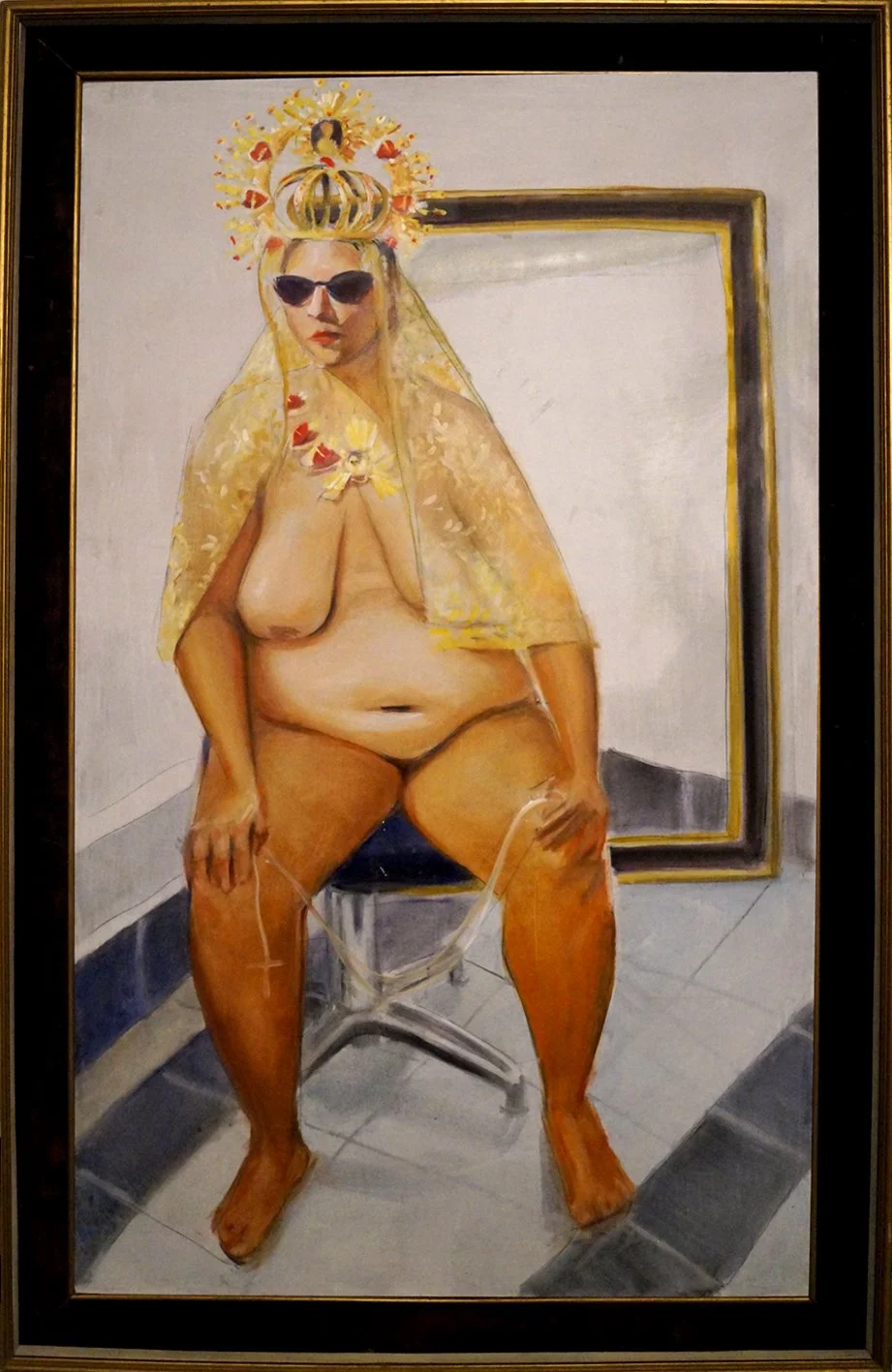
Venus of Oceanside. 2023. Oil on wood panel, gold leaf. 160 cm x 115 cm.
-
![]()
"Monotipos". 2023. 30x30cm.
-
![]()
"Monotipos". 2023. 30x30cm.

FR(L’échelle imposible ) - Antoine Granier
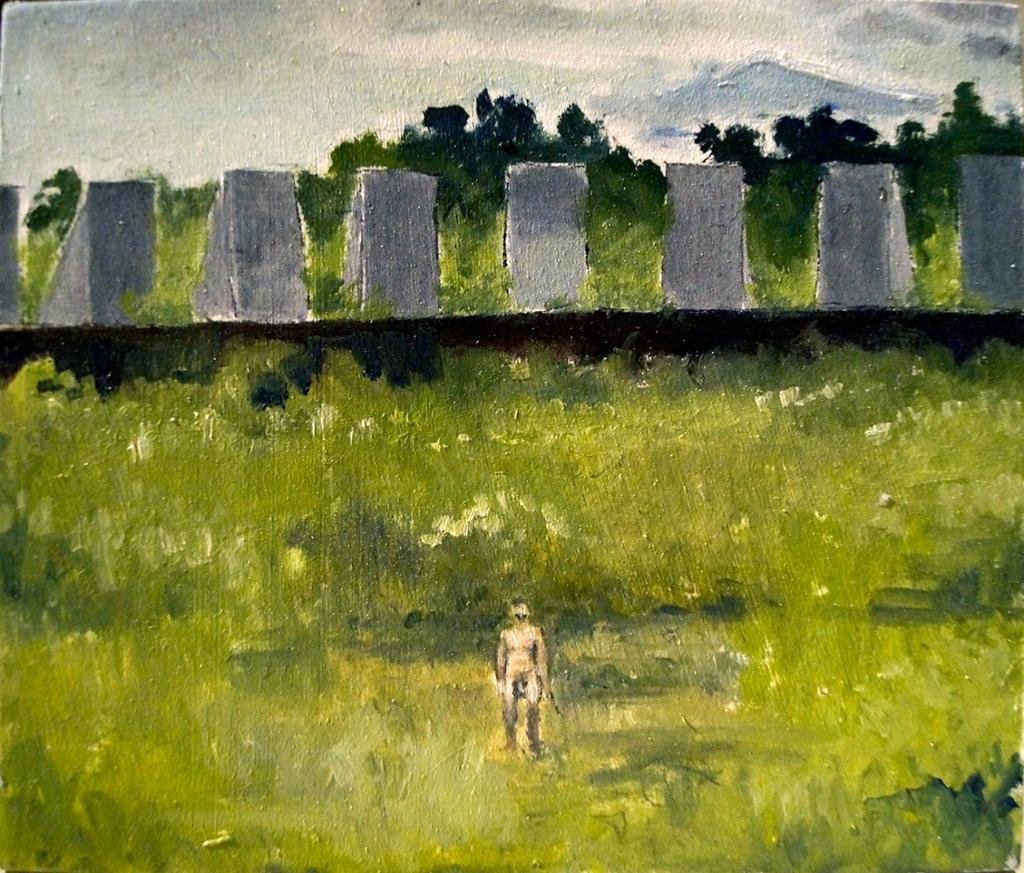
Des corps sont placés à côté de monuments étranges. Ils semblent avoir été peints ici pour donner une échelle de taille. Dans l’acte de mesurer, il y a la volonté rassurante de comprendre un espace dans lequel on se trouve. Dans les peintures de C.V. Brumund, il se passe quelque chose d’autre. L’échelle annule la mesure, et installe un rapport mélancolique au paysage, celui de la perdition dans l’espace et le temps. Le corps nu vient dire la fragilité et l’éphémère dans le vertigineux.
El espacio escultorico de la Unam, marqueur d’une activité volcanique immémoriale et des cultures primitives de Mexico semble abandonné, comme un vaisseau spatial échoué dont le code serait devenu indéchiffrable. Ailleurs, une autoroute quasi déserte fend le paysage. Depuis un pont, un corps microscopique contemple la marque de l’homme sur la nature, cette route dont l’horizon file à l’infini mais qui a perdu son mouvement et son sens premier. Dans une autre peinture, une femme se tient debout sur un fauteuil en forme de coquillage. Elle rappelle la Vénus de Botticelli, c’est la trace d’un art classique en lien avec une tradition antique, une silhouette dont la seule évocation suffit à faire émerger tout un passé enfoui.
Avec ses peintures, C.V.Brumund semble convoquer des fantômes du futur, des témoins sidérés, qui contemplent le temps qui a passé en laissant des traces. Elle nous rappelle, comme Dürer et son allégorie de la mélancolie il y a plus de cinq cent ans, que l’acte créateur est cette tentative désespérée et merveilleuse de trouver une échelle au milieu de l’infini dans lequel nous sommes perdus.
ES (Una escala imposible) - Antoine Granier
Cuerpos situados a lado de extraños monumentos; parece que fueron pintados a modo de escala. En el acto de medir existe la (reconfortante) voluntad de comprender el espacio en el que uno se encuentra. En las pinturas de C.V. Brumund algo más ocurre. La escala anula la medida y establece una relación melancólica en el paisaje; la de la pérdida en el espacio y el tiempo. El cuerpo desnudo expresa la fragilidad y lo efímero en lo vertiginoso.
El espacio escultórico de la UNAM, testigo de una actividad volcánica inmemorial así como de las culturas originarias de México parece abandonado, como una nave espacial varada cuyos secretos resultan indescifrables. Por otro lado, una autopista casi desierta divide el paisaje; desde un puente, un cuerpo microscópico contempla la huella del hombre sobre la naturaleza, aquella ruta cuyo horizonte va hacia el infinito, pero que ha perdido su movimiento y su sentido original. En otra pintura, una mujer de pie se encuentra sobre una silla con forma de concha. Recuerda a la Venus de Botticelli, una huella del arte clásico vinculada a una antigua tradición, una silueta que, con una simple evocación, alcanza a hacer aflorar todo un pasado enterrado.
Con sus pinturas, C.V. Brumund parece convocar fantasmas del futuro; testigos atónitos que contemplan el tiempo transcurrido al ir dejando huellas. Ella nos recuerda -como Durer y su alegoría de la melancolía hace más de quinientos años- que el acto creativo es aquella desesperada y maravillosa tentativa de encontrar una escala dentro del infinito en el cual estamos perdidos.
EN (Inconceivable measurements) - Antoine Granier
Here, bodies are painted beside strange monuments as if to give a sense of scale. In the act of measuring, there is a comforting urge to understand the space in which we find ourselves. In the paintings of C.V. Brumund, something very different occurs. Sheer scale becomes inconceivable, creating a melancholic relationship to the landscapes; one feels utterly lost in space and time. Here, the naked body is a manifestation of fragile ephemerality in the immeasurable.
The ‘espacio escultórico’ at the UNAM – vestige of volcanic activity and native cultures of Mexico – seems deserted, like an abandoned spacecraft who’s secrets have become indecipherable. Elsewhere, an empty highway cleaves the landscape. From a bridge, a microscopic form contemplates the imprint of humanity on nature – a road to an infinite horizon, though its purpose and momentum have been lost. In another painting, a woman stands on a scalloped chair: an allude to Botticelli's Venus; an artifact of classical art linked to ancient mythology. This silhouette, a simple suggestion, summons a vast and buried past.
With her paintings, C.V. Brumund seems to summon ghosts from the future; stunned witnesses who contemplate the traces of time long passed. She reminds us (like Durer and his ‘allegory of melancholy’ more than five hundred years ago) that the creative act is that desperate and astonishing attempt to find scale in the midst of infinity; the expanse in which we are lost.
Available work.
-
![]()
Santa Martha, 2024. Oil on wood panel, silver leaf, 40cm x 30cm.
-
![]()
Untitled, 2025. Japanese woodblock print (Moku Hanga), Kozo paper, 17cm x 23cm.
-
![]()
Conversation Piece, 2025. Lithography, pillow case. 55cm x 55cm.
-
![]()
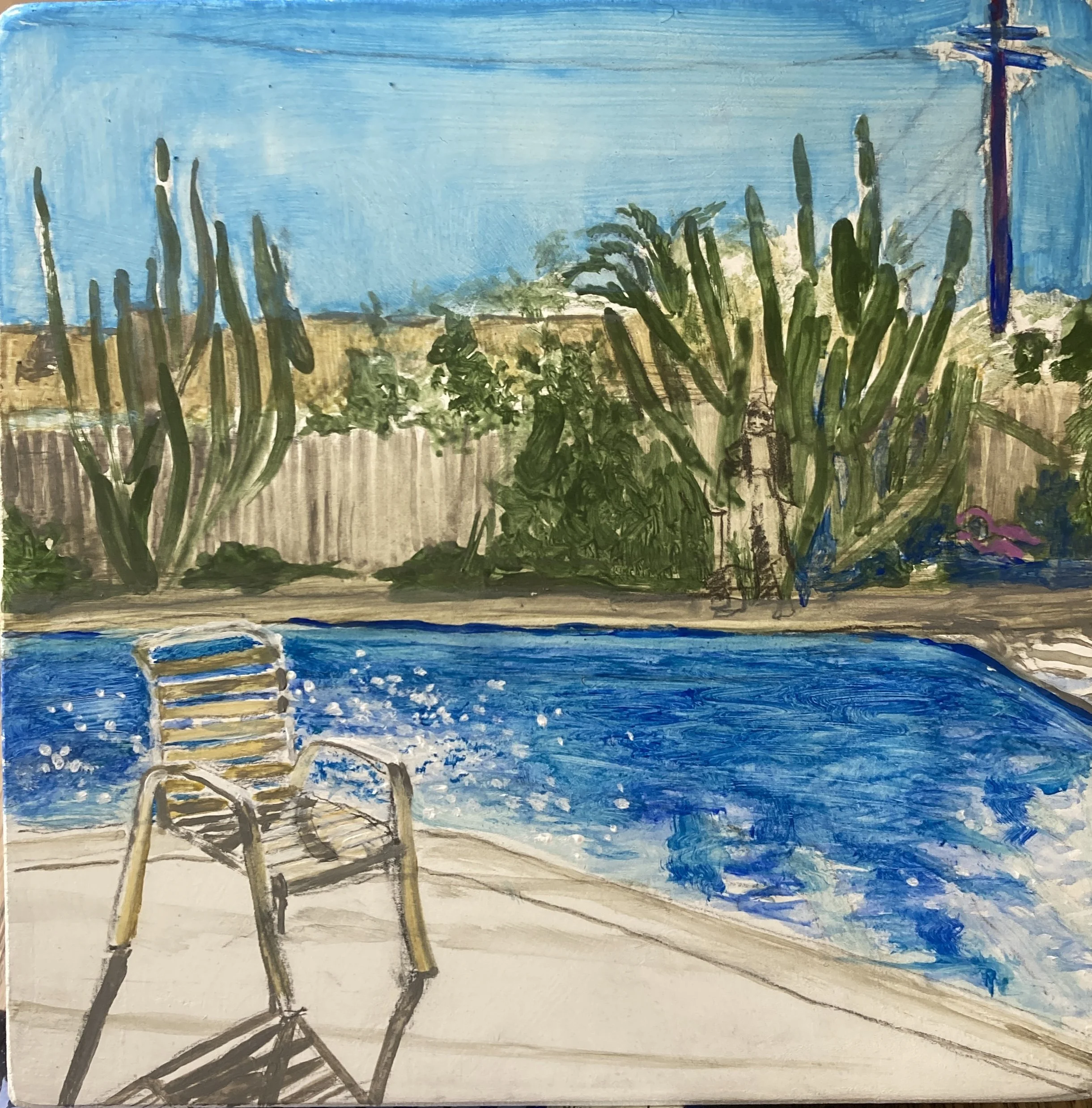
LA, 2026. Acrylic. Wood panel, 10cm x 10cm.
-
![]()
Palm Frond, 2019. Oil on wood panel. 25cm x 35cm.
-
![]()
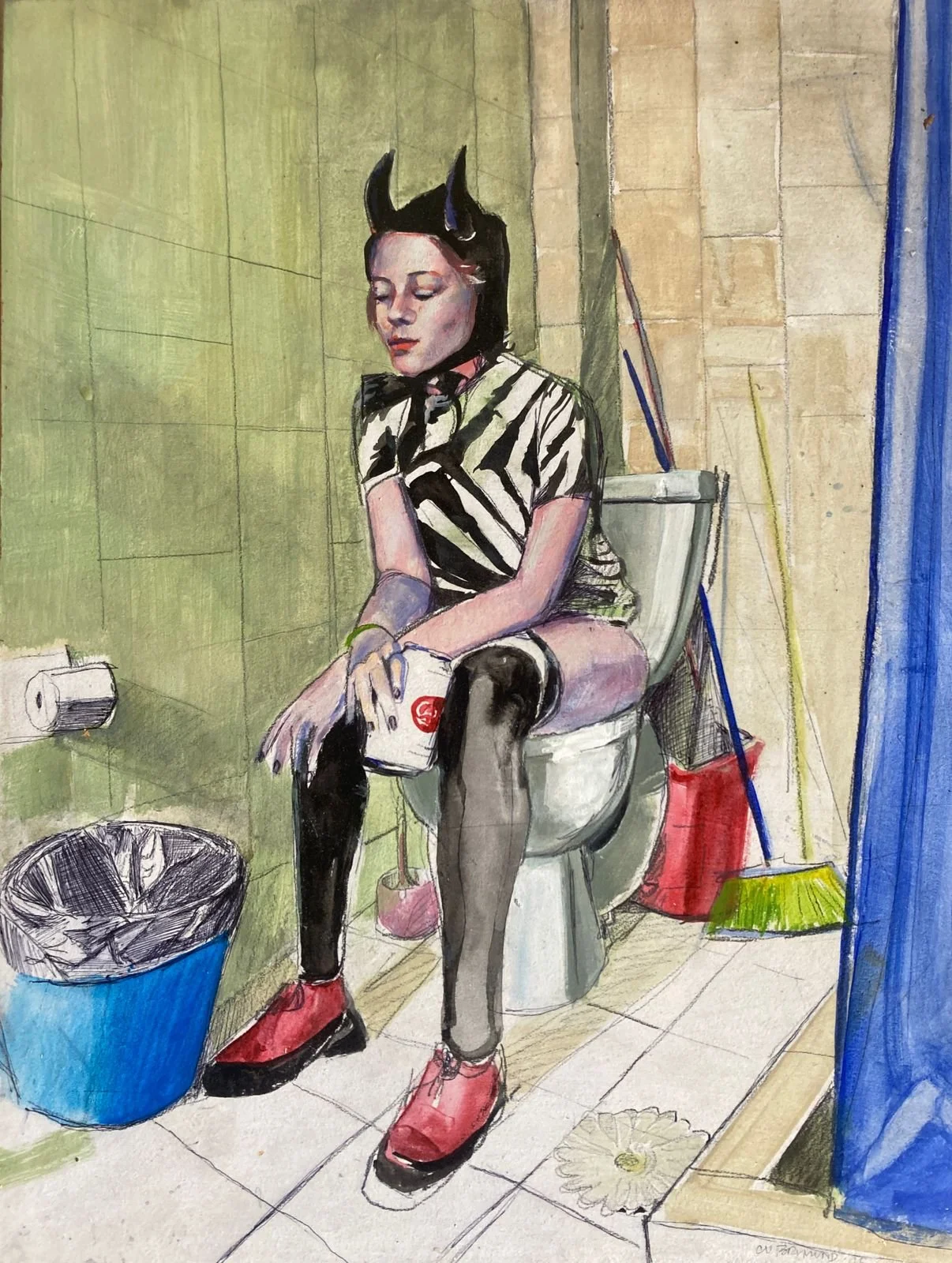
Carta Blanca, 2024. Oil on wood panel, 50cm x 40cm.
-
![]()
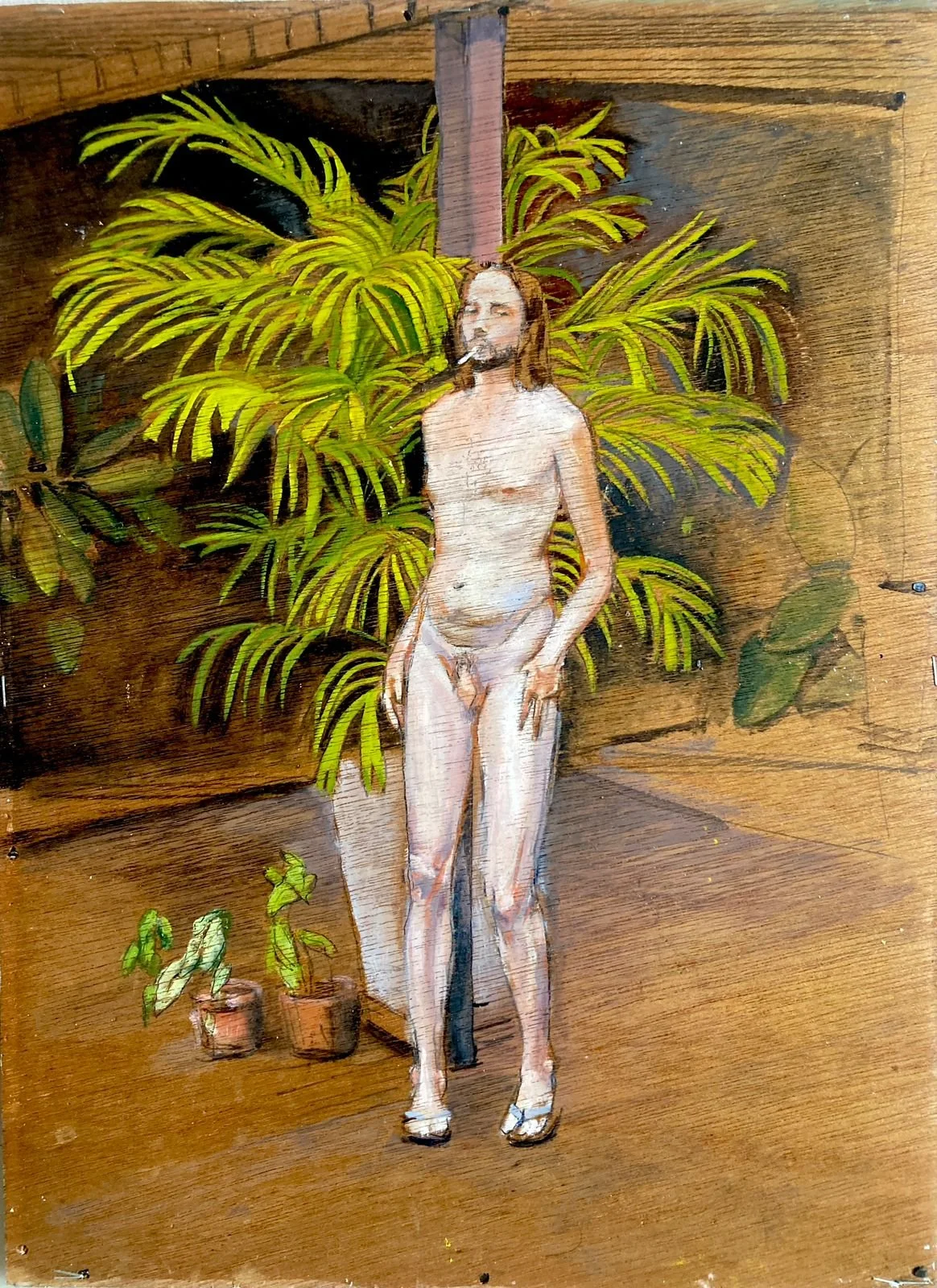
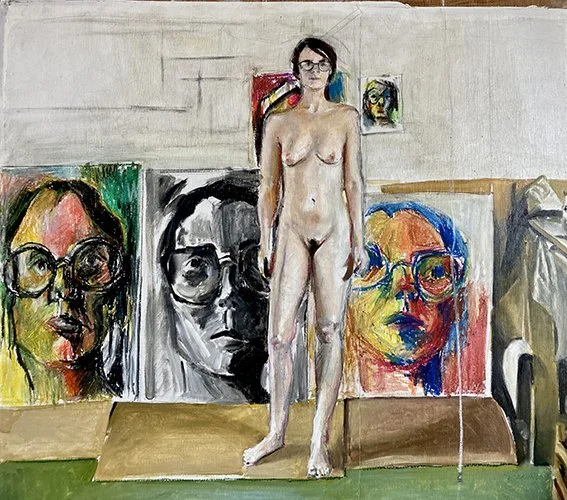
Studio Artist, 2025. Oil on wood board. 90cm x 70cm.
-
![]()
Venus of Oceanside, 2023. Oil on wood panel, 160cm x115cm.
-
![1,500 USD]()
'Eggs and Sausage' 2017. Oil on wood panel, neon installation. 30 x 30 cm.
-
![3,500]()
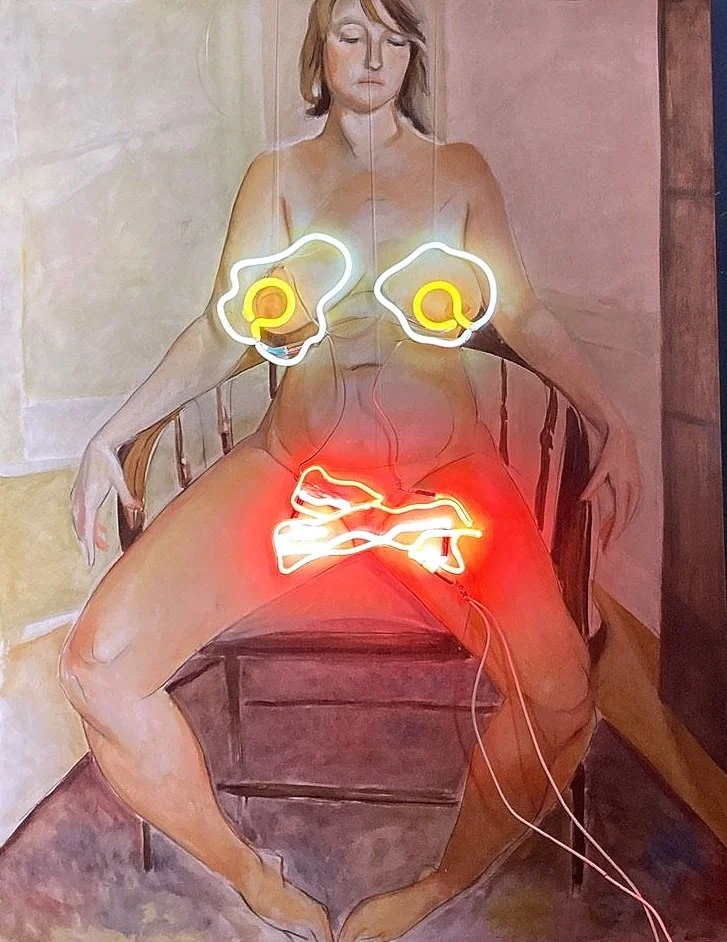
'Déjeuner sur Ellen'. 2019. Oil on wood panel, neon installation. 94 x 123cm
-
![3,500 USD]()
'Bananas!'. 2019. Oil on wood panel, neon installation. 100cm x 95cm.
-
![4,000 USD]()
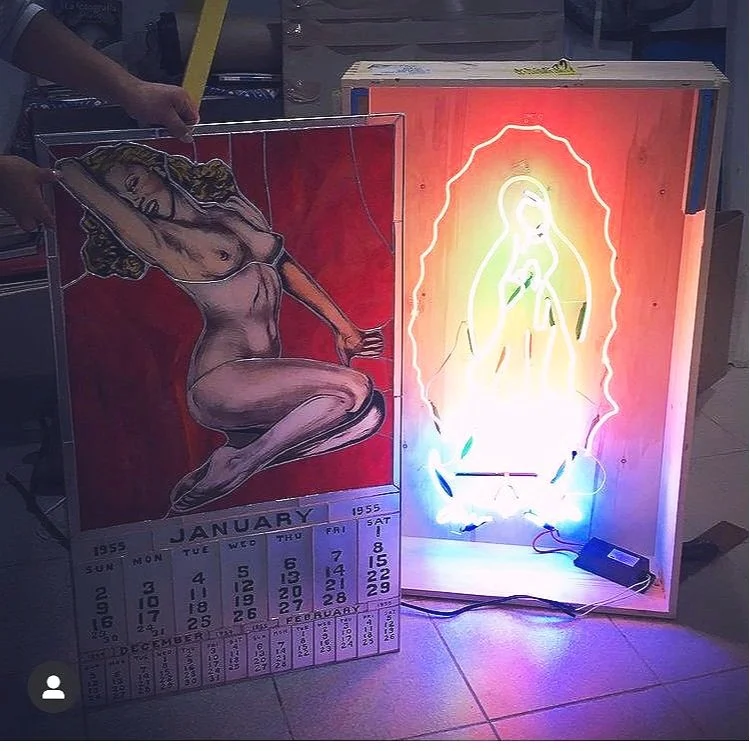
'That's why the Lady is a Tramp'. 2021. Wooden crate for salted codfish, stained glass, neon installation. 70cm x 100cm x 20cm.
-
![500 USD]()
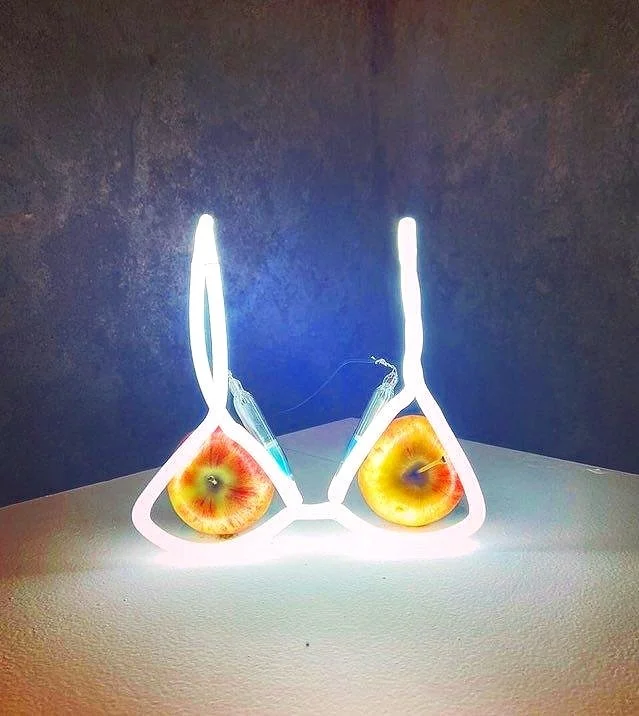
'Them apples'. 2019. Neon installation, apples. 30cm. x 20cm. (3/3)
-
![]()
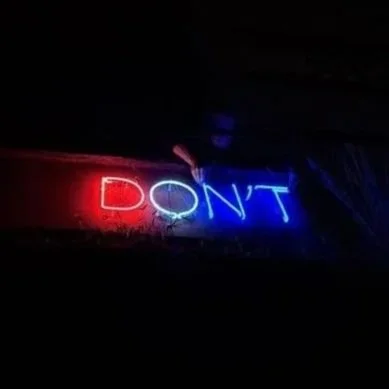
'DO/N'T' 2022. Neón. 100 x 30 cm
-
![]()
Espacio Escultorico, 2023. Oil on wood panel (tripych) 12cm x 35cm.
-
![]()
Espirituoso, 2020. Oil on wood panel. 50cm x 40cm.
-
![]()
Andy, 2017. Oil on wood panel. 100cm x 70cm x 20cm.
-
![]()
Le Chat d'Eric, 2019. Oil on wood panel, gold leaf. 30cm x 30cm.
-
![]()
Santisima Kitch, 2018. Oil on wood panel. 100cm x 70cm.
-
![]()
Charles and Gabrielle, 2018. Oil on wood panel. 30x30cm.
-
![]()
Pilou, 2018. Oil on wood panel. 50cm x 40cm.
-
![]()
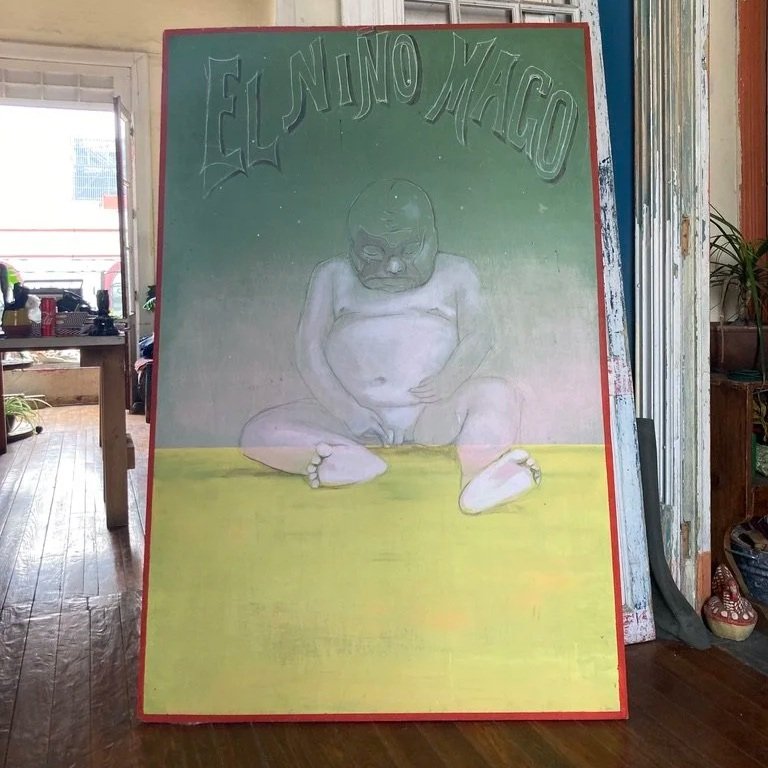
El Nino Mago y la Mujer Revoltosa (recto/verso). Acrylic, crayon, aluminum on wood panel. 165cm x 110cm.
-
![]()
Benji, 2019. Oil on wood panel. 30cm x 25cm.
-
![]()
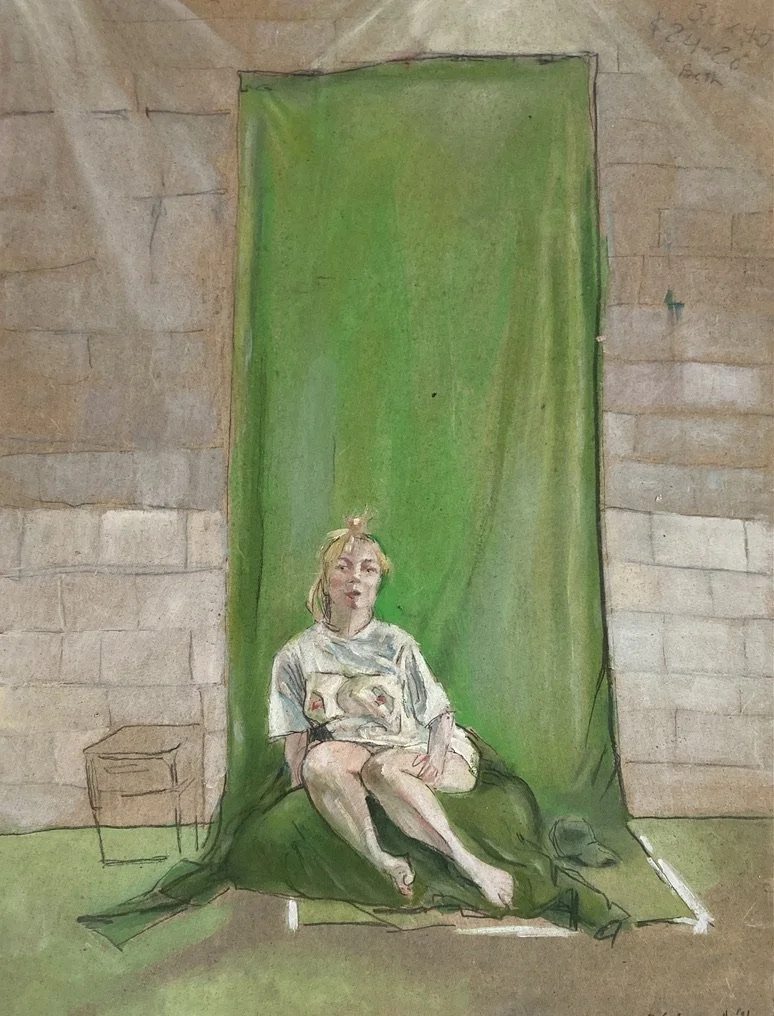
Green Screen, 2021. Oil on wood panel. 40cm x 30cm.
-
![]()
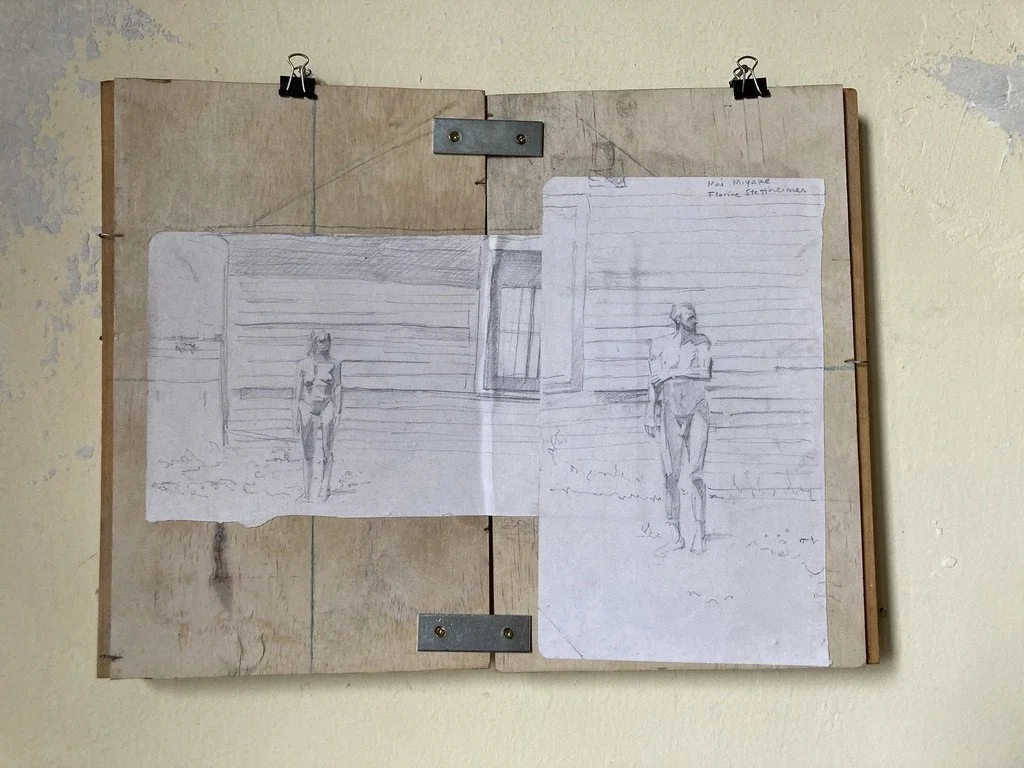
Side of The Road, 2019. Graphite on paper on construction board. 27cm x 40cm.
-
![]()
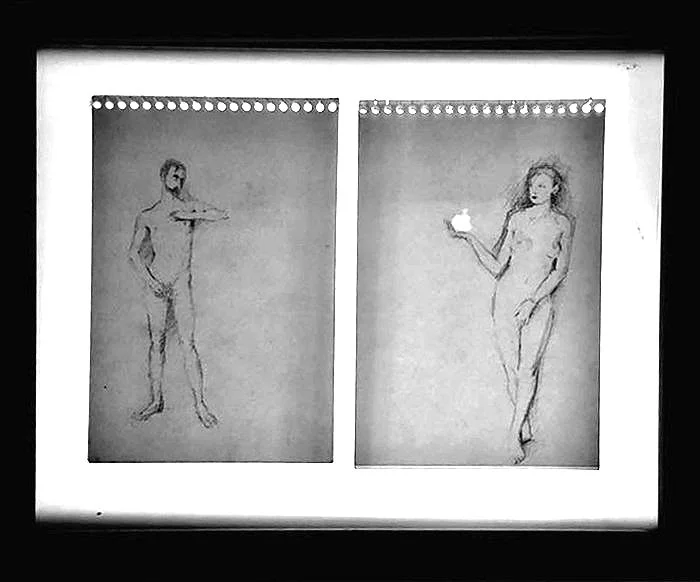
Apple, 2019. Paper, light box. 22cm x 30cm.
-
![]()
Yamuna Ganga, 2013. Sterioscope, sterioscopic cards.
-
![]()
The Lamb of God,2017. Digital photography, 32c. x 42.5cm.
-
![]()
Meat Market, 2017. Digital photography, 32cm x 42.5cm.
-
![]()
Cabeza y Virgen con Salchicha, 2023. Lithography, 23cm x 28cm.
-
![]()
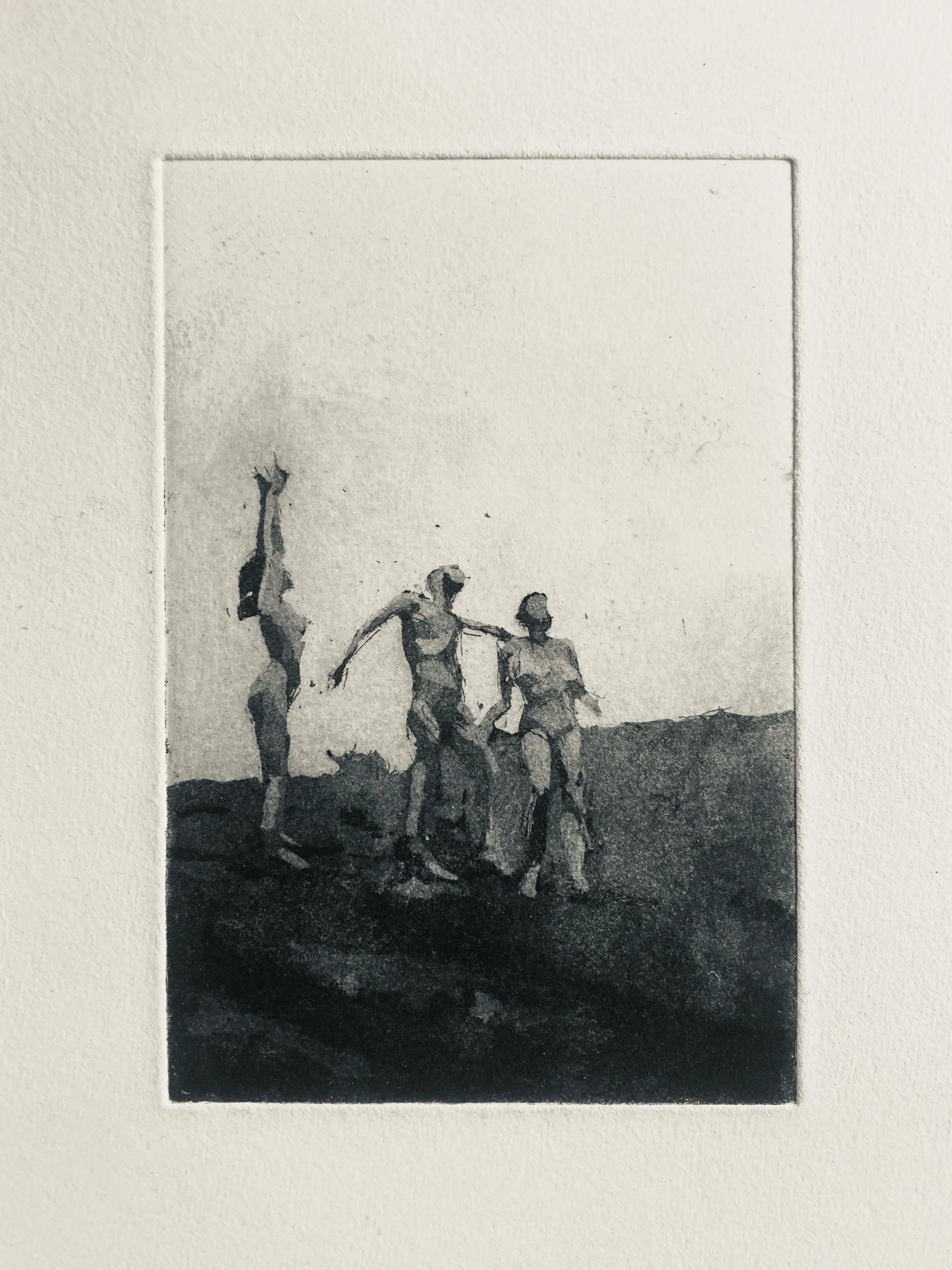
Ganekogorta, 2020. Engraving, 15cm x 10cm.